Tesla Autopilot Accident Lawsuit: Can You Sue Tesla for a Self-Driving Car Crash?
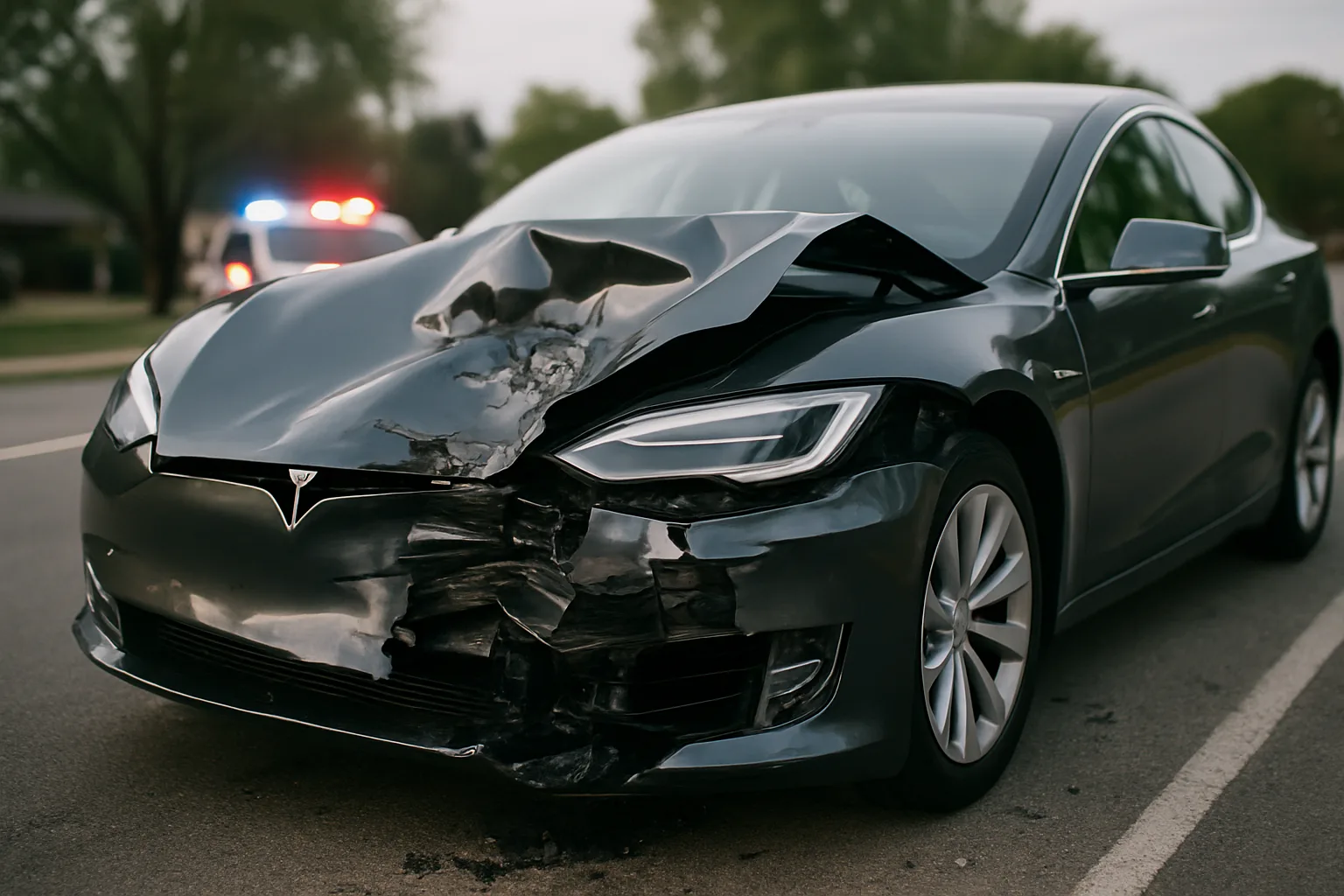
- Most Tesla Autopilot crashes are still treated as ordinary car accident lawsuits against the driver, since Autopilot is a driver-assist system, not a fully autonomous one.
- Suing Tesla directly requires a product liability theory and usually means preserving the vehicle's data before it's altered or lost.
- These cases often take longer and settle for more than a typical car accident lawsuit because of the technical investigation involved.
If you were hurt in a crash involving a Tesla running Autopilot or Full Self-Driving (FSD), you're probably asking a very specific question: who actually pays for this? Is it the driver who was supposed to be paying attention? Or is it Tesla, the company that built and marketed a system that's supposed to help drive the car?
That question matters because the answer changes everything about your case — who you sue, how long it takes, what evidence you need, and how much your claim might ultimately be worth. A standard rear-end collision lawsuit is fairly predictable. A Tesla Autopilot case rarely is.
This article walks through how a Tesla self-driving accident lawsuit actually works in practice, when you can bring a claim against Tesla itself versus the driver, and what to expect from the process from a timing and settlement-value standpoint. This is general legal information, not legal advice for your specific situation — every Autopilot case turns on its own facts and state law.
Below, we'll also look at how these claims interact with insurance, what happens if a pedestrian or cyclist is hurt rather than another driver, how multi-vehicle pileups complicate things further, and why some cases end up consolidated with others nationwide.
What Counts as a Tesla "Autopilot" or Self-Driving Car Accident?
Tesla currently sells two driver-assistance packages: standard Autopilot (lane-centering and adaptive cruise control) and the more advanced Full Self-Driving (FSD) Capability, marketed for years under a "Supervised" label. Neither one makes the car legally autonomous.
That distinction is the whole ballgame. Under federal guidance, these are Level 2 driver-assistance systems. The driver is legally required to keep their hands available, eyes on the road, and full attention on driving at all times — even with Autopilot or FSD engaged.
A "self-driving car accident" in the Tesla context usually falls into one of these patterns:
- The car was on Autopilot or FSD and failed to brake, swerved, or struck a stationary object, pedestrian, or another vehicle.
- The driver was distracted or asleep while relying on Autopilot to do more than it's designed to do.
- A sudden, unexpected "phantom braking" event caused the Tesla to stop abruptly, triggering a rear-end collision.
- The system failed to disengage or handed control back to the driver too late for them to react.
Each of these scenarios points toward a different legal theory, and sometimes more than one applies at once.
Illustrative crash scenarios
Imagine a Tesla on FSD approaching an intersection where a stalled vehicle sits partly in the lane. If the system fails to recognize the obstacle and the driver is looking at a phone, the resulting crash could implicate both the driver and the software.
Now imagine a different scenario: a Tesla on Autopilot on a clear highway suddenly brakes hard for no visible reason, and the car behind cannot stop in time. That "phantom braking" pattern shifts more attention toward the system's sensor behavior rather than the lead driver's attentiveness.
These illustrative examples aren't predictions of outcome — they're meant to show how the same basic facts (a crash, an injury, an engaged driver-assist system) can lead to very different legal theories depending on small details in the data.
Can You Sue Tesla Directly for an Autopilot Crash?
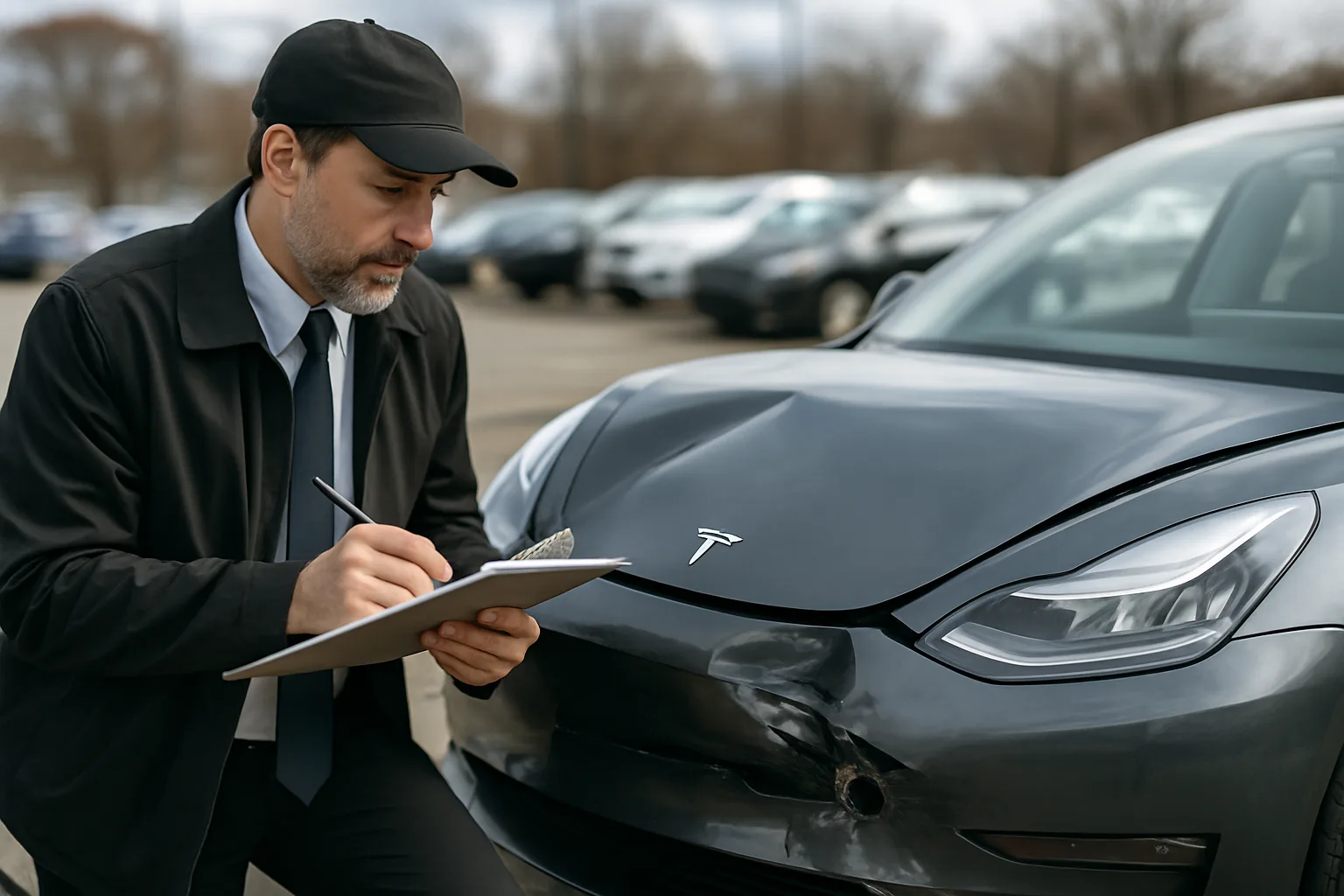
Yes, you can sue Tesla directly — but it's a different kind of case than a typical car accident lawsuit, and it's harder to win. Suing the manufacturer means you're not just claiming someone drove badly. You're claiming the product itself was dangerously defective.
Product liability vs. driver negligence
Most car accident lawsuits are built on negligence: the other driver breached a duty of care, and that breach caused your injuries. A claim against Tesla is built on product liability law instead, which generally requires showing one of the following:
- Design defect — the Autopilot or FSD system was designed in a way that made it unreasonably dangerous, even when used as intended.
- Manufacturing defect — something went wrong in how that specific vehicle's hardware or software was built or installed.
- Failure to warn — Tesla didn't adequately warn drivers (or the public) about the system's real limitations.
Plaintiffs and their attorneys in several high-profile cases have argued that Tesla's marketing — the names "Autopilot" and "Full Self-Driving" themselves — created a false impression that the car could drive itself, encouraging exactly the kind of driver complacency that leads to crashes. That's a failure-to-warn and marketing-based theory, separate from whether the underlying code had a bug.
What you'd need to prove against Tesla
To hold Tesla liable, you generally need to show the defect existed when the car left the factory (or was pushed via software update), that you were using the system as intended or in a reasonably foreseeable way, and that the defect was a direct cause of your injuries — not just a contributing factor that the driver's own inattention overshadowed.
That last point is where many Autopilot claims against Tesla run into trouble. If the evidence shows the driver had their hands off the wheel for an extended period, was watching a video, or ignored multiple visual and audible alerts, a jury may find the driver's own conduct was the real cause, not the software.
Strict liability considerations
Many states allow product liability claims to proceed under strict liability, meaning you don't have to prove Tesla was careless in how it designed or tested the system — only that the product was defective and that the defect caused harm. This is a lower bar than negligence in some respects, but proving the defect itself still requires technical evidence.
Strict liability theories are part of why these lawsuits often hinge so heavily on the vehicle's own logs and expert interpretation of that data, rather than on testimony about how careful or careless Tesla's engineers were as people.
Who Is Usually Liable When Autopilot or FSD Is Involved?
In practice, liability in these cases tends to spread across more than one party, and identifying all of them early is one of the most valuable things an attorney does on your behalf.
The Tesla driver
In the large majority of Autopilot crash claims that get resolved, liability lands primarily on the driver. Tesla's own user agreements and in-car alerts repeatedly state the driver must stay engaged and ready to take control. A driver who didn't is, legally speaking, still driving — Autopilot or not.
Tesla, Inc.
Tesla becomes a defendant when there's evidence the system itself malfunctioned, failed to detect an obvious hazard, or behaved in a way inconsistent with its own specifications — say, accelerating instead of braking, or failing to register a clearly visible pedestrian or stopped vehicle ahead.
Third parties
Sometimes liability extends further: a repair shop that improperly serviced sensors or cameras, a parts supplier whose component failed, or even a municipality if poor road design or missing signage contributed to the crash. A thorough car accident settlement evaluation accounts for every contributing party, not just the obvious one.
Comparative negligence
Most states apply some version of comparative negligence, meaning fault can be divided percentage-wise between the driver, Tesla, and even the injured person if they contributed in some way. In a state with a 51% bar rule, for example, a plaintiff found more than half at fault recovers nothing — which is one reason these allocations matter so much.
Common liability splits, illustrated
To make the comparative fault concept concrete, here is an illustrative (non-binding) breakdown of how fault might be allocated across a few hypothetical scenarios:
| Scenario | Driver fault | Tesla fault | Other party |
|---|---|---|---|
| Driver watching a video, system functioned normally | ~90-100% | 0-10% | None |
| Phantom braking, attentive following driver | 0-20% | 50-80% | None |
| Poorly maintained sensors after third-party repair | 20-40% | 20-40% | 20-40% (repair shop) |
These percentages are purely illustrative; actual allocations depend entirely on the facts, the jurisdiction, and the evidence developed during the case.
How a Tesla Autopilot Lawsuit Differs From a Typical Car Accident Lawsuit
An ordinary fender-bender lawsuit usually comes down to police reports, witness statements, and photos of the damage. A Tesla Autopilot case adds layers most auto accident lawsuits never touch.
The data fight
Teslas log enormous amounts of data: speed, steering input, braking, camera footage, and whether Autopilot or FSD was active in the seconds before impact. This data is gold for your case — and it can be overwritten or lost if it isn't preserved quickly through a formal legal hold or subpoena.
Expert witnesses
Where a normal rear-end case might need an accident reconstructionist, a Tesla Autopilot case often needs a software engineer, an automotive systems expert, and sometimes a human-factors specialist to explain how a reasonable driver would have (or should have) responded to the system's alerts.
A more aggressive corporate defendant
Tesla has consistently fought Autopilot-related litigation hard, including disputes over data access and characterizations of its safety record. That's different from negotiating with a normal auto insurer, and it's a major reason these cases often need a car accident lawsuit lawyer with specific experience in product liability and technology litigation, not just standard personal injury work.
Regulatory backdrop
Federal regulators have been actively investigating Autopilot and FSD crash patterns for years. The National Highway Traffic Safety Administration tracks crash data involving advanced driver-assistance systems, and findings from NHTSA's investigations have shown up as supporting evidence in private lawsuits. That overlapping regulatory attention can work in an injured person's favor, since it sometimes surfaces internal data or patterns that wouldn't otherwise be public.
Discovery disputes are common
Because Tesla treats much of its system performance data as proprietary, discovery in these cases frequently involves motions to compel, protective orders, and arguments over what counts as a trade secret versus what must be disclosed. This adds procedural steps that simply don't exist in a routine two-car claim.
Courts have increasingly required Tesla to produce relevant crash data under appropriate confidentiality protections, but getting there can take several rounds of motions. That procedural friction is part of why timelines stretch out, which we cover next.
How Does Insurance Fit Into a Tesla Autopilot Claim?
Even when a product liability claim against Tesla is on the table, the driver's auto insurance policy is almost always still part of the picture. Insurance and lawsuit strategy tend to move on parallel tracks.
The driver's auto policy
The at-fault driver's liability coverage typically responds first, regardless of whether Autopilot was engaged, because the policy covers the driver's negligent operation of the vehicle. Insurers may try to argue the crash was a "product failure" to shift responsibility away from their policyholder.
Underinsured and uninsured motorist coverage
If the at-fault driver's policy limits are too low to cover serious injuries, your own underinsured motorist coverage may need to fill the gap while the product liability claim against Tesla proceeds separately. This is one reason it helps to review your own policy early, not just the other driver's.
Why insurers move cautiously
- Insurers are aware that a product defect finding could shift a portion of liability away from their insured driver.
- Adjusters may request access to vehicle data before making any offer, which can slow down the claims process.
- Some insurers wait to see how parallel regulatory investigations or related lawsuits develop before settling.
What If a Pedestrian or Cyclist Was Hurt by a Tesla on Autopilot?
Pedestrian and cyclist cases involving Autopilot or FSD raise some of the most serious legal and factual questions, because the injured person had no control over the vehicle at all.
Why these cases are different
A pedestrian struck by a Tesla cannot be assigned fault for failing to monitor the car's systems, which removes one of the defense arguments that often comes up in driver-versus-driver crashes. The focus shifts almost entirely to whether the system should have detected the pedestrian and reacted in time.
Crosswalk visibility, lighting conditions, and whether the pedestrian was in a marked or unmarked crossing area can still affect comparative fault, but the analysis centers heavily on the vehicle's sensor performance.
Evidence that matters most
- Camera and radar/sensor logs showing what the vehicle's system detected and when.
- Whether the system issued any warning or braking response before impact.
- Lighting, weather, and road conditions at the time of the crash.
- Any prior similar incidents at the same location or with the same software version.
Multi-Vehicle Pileups and Autopilot: Added Complexity
When an Autopilot or FSD-related crash triggers a chain-reaction pileup, the legal picture gets considerably more complicated than a two-car case.
Sorting out the sequence of events
Investigators and experts typically need to reconstruct the precise order in which vehicles struck each other, since fault can shift dramatically depending on whether a car was hit while already stopped or was still moving when it struck the vehicle ahead. Data from the Tesla itself often becomes the most reliable timeline source available.
Multiple injured parties, multiple claims
In a pileup, several injured people may be pursuing claims against the same set of defendants — the Tesla driver, Tesla itself, and possibly other drivers involved. This can mean:
- Shared evidence (like the vehicle's data) being used across multiple separate lawsuits.
- Insurance policy limits being divided among several claimants, which can affect how much each person ultimately recovers.
- Coordination, or sometimes competition, between different injured parties' legal teams.
Why this affects strategy
If you were one of several people hurt in a pileup involving a Tesla on Autopilot, your attorney's strategy may need to account for how quickly other claims are moving and whether available insurance coverage could be exhausted by earlier settlements. This is another reason early legal advice matters in these multi-party situations.
How Long Does a Car Accident Lawsuit Take When Autopilot Is Involved?
If you're wondering how long does a car accident lawsuit take in general, the honest answer is: it depends heavily on complexity. A straightforward two-car crash with clear fault might resolve in six months to a year. A Tesla Autopilot case rarely moves that fast.
Why these cases take longer
Expect the timeline to stretch for a few concrete reasons:
- Data preservation and forensic analysis of the vehicle's logs can take months on its own.
- Tesla, as a well-resourced corporate defendant, tends to litigate discovery disputes rather than hand over data voluntarily.
- Expert reports on software behavior and human-factors analysis take time to prepare and are often contested.
- If the case goes to trial rather than settling, court calendars in many jurisdictions add a year or more before a trial date is even available.
Realistic timeline ranges
So if you're asking how long can a car accident lawsuit take when Tesla is a named defendant, a reasonable illustrative range is 18 months to three years from filing to resolution, sometimes longer if it heads to trial or an appeal. Cases against the driver alone, without Tesla as a defendant, tend to move closer to the typical 9-to-18-month range seen in standard injury litigation.
For a deeper breakdown of how each stage — investigation, demand, negotiation, filing, and trial — actually unfolds, see this guide on how long does a car accident settlement take, which applies to the underlying claim process before and alongside any lawsuit.
Settling before trial
Most car accident lawsuits, including Autopilot ones, settle before reaching a jury. The decision point usually comes after both sides have seen the strength of the data and expert opinions during discovery — that's when realistic settlement numbers tend to emerge.
Consolidated and coordinated litigation
Because Tesla faces numerous Autopilot-related lawsuits across the country, some cases get coordinated for pretrial purposes, particularly around shared expert testimony or common discovery disputes. This doesn't merge the cases into one outcome, but it can affect timing, since rulings in one coordinated case may influence how others proceed.
If your case ends up linked to broader litigation in this way, your attorney should be able to explain how that coordination affects your specific timeline, since it can add steps but sometimes also speeds up resolution of common factual disputes.
What's a Tesla Autopilot Car Accident Lawsuit Settlement Worth?
There's no single figure that applies across the board, and anyone who promises you an exact number before reviewing your medical records and the crash data isn't being straight with you. But there are factors that consistently drive value up or down.
Factors that increase settlement value
- Clear data showing the system malfunctioned in a way contrary to Tesla's own published specifications.
- Severe or permanent injuries — spinal damage, traumatic brain injury, amputation — that carry significant future medical costs.
- Strong liability evidence with minimal comparative fault assigned to you.
- A pattern of similar prior incidents that supports a design-defect theory rather than a one-off event.
Factors that decrease it
- Evidence the driver ignored repeated alerts or had hands off the wheel for an extended stretch.
- Minor or soft-tissue injuries with a full, documented recovery.
- Comparative fault findings against the injured person, such as failing to wear a seatbelt.
How this compares to a typical claim
The average car accident settlement amount for a standard injury claim — covering medical bills, lost wages, and pain and suffering without a product liability angle — generally falls in a moderate range driven mostly by medical costs and severity. Autopilot cases that successfully establish a defect theory can settle meaningfully higher, illustratively, because the inclusion of a deep-pocketed corporate defendant and punitive-style exposure changes the settlement calculus. None of these figures are guarantees; they're illustrative patterns based on how injury and product liability cases typically resolve.
The role of future damages
Severe Autopilot crash injuries often involve long-term medical needs — ongoing physical therapy, future surgeries, or permanent disability accommodations. These future damages frequently account for a larger share of settlement value than the immediate medical bills, especially in cases involving younger plaintiffs with decades of expected future care.
Economic experts are often retained specifically to project these future costs, and their projections become a central part of settlement negotiations once liability is reasonably established.
How Does an Uber Car Accident Lawsuit Compare to a Tesla Autopilot Case?
It's a fair comparison, because both involve a layer of technology and a corporate entity sitting between the injured person and a simple two-driver claim. An Uber car accident lawsuit typically involves figuring out which insurance policy applies — the driver's personal policy, or Uber's much larger commercial policy — depending on whether the driver was logged into the app, waiting for a ride request, or actively transporting a passenger.
A Tesla Autopilot case has a similar layered structure, but instead of insurance-tier questions, you're untangling driver behavior versus software performance. In both situations, the corporate defendant (Uber or Tesla) has significantly more resources and legal sophistication than an individual driver, and both tend to result in longer, more document-heavy litigation than a basic two-car crash.
If you were a passenger in a rideshare vehicle that happened to be a Tesla running Autopilot, you could realistically be looking at claims against the driver, Uber's insurer, and Tesla simultaneously — which is about as complex as a car accident lawsuit gets.
Average Lawsuit Settlement for a Car Accident: Where Autopilot Cases Fit
When people search for the average lawsuit settlement for car accident claims generally, they're usually picturing a conventional negligence case. Those settlements are driven primarily by medical expenses, wage loss, and pain and suffering multipliers tied to injury severity.
Autopilot litigation adds variables that don't exist in a standard claim: the strength of the data evidence, the credibility of competing expert witnesses, and how a jury might view a large technology company's responsibility for marketing a system that drivers may have over-trusted. That's why settlement ranges in these cases can vary more widely than in conventional claims — the uncertainty itself becomes part of the negotiation.
What Should You Do Immediately After a Tesla Autopilot Crash?
The steps you take in the first days after the crash can determine whether critical evidence survives long enough to matter.
Preserve the vehicle and its data
Don't let the vehicle go to a standard body shop or get sold for salvage before its data has been preserved. Tesla's onboard logs, including whether Autopilot or FSD was engaged, can be overwritten through normal vehicle operation or software updates.
Get medical care and document everything
See a doctor even if your injuries seem minor at first. Adrenaline masks pain, and a documented medical record close in time to the crash is one of the strongest pieces of evidence in any injury claim.
Report it properly
File a police report and request the report number. If you believe Autopilot or FSD was active, say so clearly and have it noted, since this detail shapes the entire direction of the case.
Avoid early settlement offers
Insurance adjusters — and sometimes Tesla's own representatives — may reach out quickly with an offer. Early offers are almost always lower than the claim's actual value, especially before the full data picture and your medical prognosis are known.
Consult an attorney before giving statements
Recorded statements to an insurer can be used against you later, particularly around questions of how attentive you were or how the system was being used. Speaking with an attorney first protects you from inadvertently undercutting your own claim.
A practical early checklist
- Request emergency preservation of the vehicle's data through a written legal hold letter.
- Photograph the vehicle, the scene, and any visible damage before repairs begin.
- Identify and contact any witnesses while their memory of the event is fresh.
- Keep a written timeline of your symptoms and medical visits from day one.
- Avoid posting about the crash on social media while the claim is pending.
Do You Need a Car Accident Lawsuit Lawyer for an Autopilot Case?
You're allowed to handle any car accident claim on your own, but Autopilot and FSD cases are among the least forgiving for a self-represented plaintiff. The reasons come down to resources and complexity, not just legal formality.
Why these cases favor experienced counsel
- You need someone who knows how to issue a legal hold and subpoena vehicle data before it disappears.
- You need access to credible accident reconstruction and software experts, which most firms retain through established networks.
- You're going up against a company with an in-house and outside legal team built specifically to defend Autopilot litigation.
- Settlement negotiations involving a product liability theory require leverage that typically comes from demonstrated trial readiness.
How attorneys are usually paid
Most car accident lawsuit lawyers, including those handling Autopilot claims, work on a contingency fee basis — you pay nothing upfront, and the fee comes out of any settlement or verdict. This arrangement means the financial barrier to getting a qualified opinion on your case is low, even though the case itself may be complex.
What a free consultation can tell you
A consultation early on can clarify whether your facts support a claim against the driver alone or whether there's a real basis to bring Tesla in as well. That distinction shapes the entire strategy, the timeline, and ultimately what the case might be worth.
Questions worth asking during a consultation
- Has the attorney or firm handled Autopilot or FSD-related claims before?
- Do they have established relationships with software and human-factors experts?
- How do they typically approach data preservation in the first weeks after a crash?
- What is their general experience litigating against large corporate defendants, as opposed to settling primarily with insurers?
Key takeaways
A Tesla Autopilot or FSD crash sits at the intersection of ordinary car accident law and product liability law, and figuring out which one — or both — applies to your situation is the first real decision point in your case. The driver's level of attentiveness, the vehicle's own data, and how the system actually behaved in the moments before impact all shape whether Tesla becomes a defendant alongside the driver.
These cases generally take longer than standard car accident lawsuits because of data preservation, expert analysis, and a well-resourced corporate defendant willing to litigate hard. Settlement values vary widely and depend far more on the strength of your evidence than on any general average. If you've been hurt in a crash involving Autopilot or FSD, getting the vehicle's data preserved quickly and speaking with an attorney experienced in this niche of litigation gives you the clearest picture of what your specific case may be worth.
Frequently asked questions
Can you sue Tesla for an Autopilot car accident?
Who is liable in a Tesla Autopilot crash, the driver or Tesla?
How long does a car accident lawsuit involving Tesla Autopilot take?
What is the average settlement for a Tesla self-driving accident lawsuit?
Is Tesla Autopilot considered self-driving for legal purposes?
This article is for general informational purposes only and does not constitute legal advice. Always consult a qualified professional about your specific circumstances.

Written & reviewed by
Can OTUConsumer Legal Information Researcher & Editor
Can OTU researches and edits every guide on this site, drawing on primary legal sources, court records, and state statutes to produce accurate, plain-English explanations of U.S. compensation and personal injury claims.
View all guides →