Can a Passenger Sue if the Driver Was Uninsured in a Car Accident?
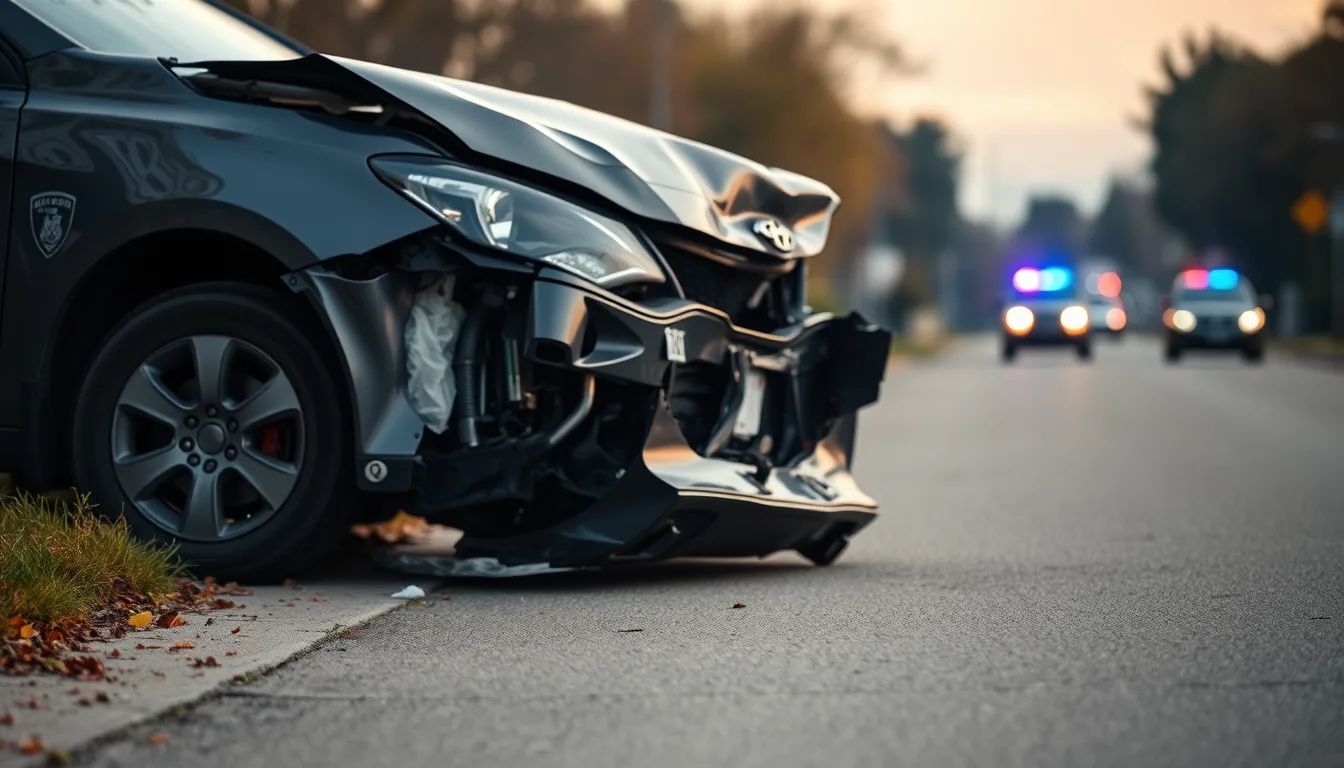
- Your own uninsured/underinsured motorist (UM/UIM) coverage is usually the source of payment when the at-fault driver has no policy.
- If the crash involved Uber, Lyft, a bus, or a drunk driver, additional commercial policies and legal theories come into play.
- Deadlines are short — typically one to three years, and sometimes as little as 60 to 180 days for a claim against a public transit agency.
You weren't driving. You were in the passenger seat when someone ran a red light, rear-ended a truck, or drifted off the shoulder. Then you found out the driver had no insurance at all.
Now the medical bills are arriving and you're trying to work out whether the law gives you any realistic route to recovery.
It does, in most circumstances. A passenger injured through someone else's carelessness has the same right to compensation as anyone else in the vehicle — and often a cleaner path to it, because there's usually no argument that the passenger caused the collision.
The complication is money, not fault. An uninsured driver rarely has the assets to pay a judgment out of pocket, so these cases are usually built around insurance policies rather than the driver's bank account. Below is the process in order, plus how it changes when the vehicle was an Uber, a Lyft, a city bus, or driven by someone who'd been drinking.
This is general information only and not legal advice for your specific situation.
Can a passenger sue an uninsured driver after a car accident?
Yes. In every state, an injured passenger may bring a negligence claim against the driver whose carelessness caused the crash — whether that's the driver of the car you were riding in, the driver of the other vehicle, or both of them. The absence of insurance doesn't erase the legal right to sue.
It only makes collecting on that right harder.
Liability and collectability are two different questions, and it helps to keep them separate from the start. Liability asks who caused the crash. Collectability asks where the money will come from.
An uninsured driver can be 100% liable and still have nothing to pay you with — which is why an experienced attorney looks first at the insurance policies in play, not the driver's bank balance.
What "suing" actually means in an uninsured-driver case
Most people picture a courtroom when they hear the word "sue." In reality, the overwhelming majority of passenger injury claims are resolved through a negotiated settlement with an insurance company, long before a complaint is ever filed. Filing suit is a tool you use when negotiation stalls or a deadline forces your hand.
In an uninsured case, the claim is often directed at the passenger's own UM/UIM carrier rather than the driver. Your own insurer doesn't pay voluntarily, though. It evaluates the claim much as it would a claim against a stranger, which is why the quality of your evidence matters so much.
Why a car accident passenger claim is usually the strongest claim in the vehicle

Defense lawyers and adjusters know something about passengers: they're hard to blame. A passenger isn't steering, isn't braking, and isn't choosing the speed. When the crash is a straightforward failure to yield, a rear-end collision, or a lane-change sideswipe, the passenger's own conduct is usually irrelevant.
That matters in states that apply comparative negligence rules. If a driver is found 20% at fault for their own injuries, their recovery drops by 20%. A passenger facing the same crash often sits at zero percent fault and keeps the full value of the claim.
There are limits. Only a small number of states still enforce guest statutes, which historically required a passenger to prove gross negligence or willful misconduct to sue a non-paying host driver. If you live in one of those states, ask a local attorney how it applies to you.
More often, a passenger gets blamed in three situations: riding with a driver they knew had been drinking, not wearing a seatbelt, or grabbing the wheel or distracting the driver. All three are fact questions, and all three can be answered with evidence.
Where the money actually comes from: five sources in an uninsured driver claim
Before you can plan a claim, you need a map of every policy that might respond. Attorneys call this a coverage search, and in an uninsured-driver case it often matters more than the merits do.
- The at-fault driver's own policy — if the driver had coverage but denied it, or had coverage on a different vehicle, a claim can still be made.
- The at-fault driver's personal assets — rarely substantial, but worth checking for a home, wages, or a business interest.
- Your own UM/UIM coverage — the most common practical answer when the other driver has no insurance.
- A household policy — UM/UIM follows the insured person, so a parent's or spouse's policy may apply even if you don't own a car.
- A commercial policy — rideshare companies, bus operators, delivery companies, and employers usually carry far more coverage than an individual driver.
Making an uninsured driver claim on your own policy
Uninsured motorist coverage is designed for exactly this situation. If the at-fault driver has no liability insurance — or the policy won't pay because of a denial or insolvency — your UM coverage steps in to compensate you, up to your policy limit.
Underinsured motorist coverage handles the near miss: the other driver has a policy, but it's too small for your injuries. In some states UM and UIM are separate coverages you have to buy individually; in others they're bundled. Check your declarations page, or ask an agent to explain each line.
Two features make UM valuable to passengers. First, it generally follows the person, not the car, so it can cover you in a friend's vehicle. Second, many policies allow stacking — combining limits from multiple vehicles on the same policy — when the loss requires it.
Not every state permits stacking, so this is a genuine question for a local lawyer.
One thing to expect: your own insurer will investigate you as adversarially as any other carrier. It may ask for a recorded statement, an independent medical examination, or authorization to pull your full medical history. Cooperate, but understand you're in an adversarial process even though the logo on the letterhead is familiar.
Step-by-step: how to pursue a passenger injury claim when the driver is uninsured

The sequence below is the order that generally protects your claim. It's a general framework, and your state's rules may reorder some of it.
Step 1: Get medical care and keep a continuous treatment record
See a doctor within a day or two, even if you feel mostly fine. Adrenaline masks injuries, and soft-tissue damage often peaks days later. A documented gap in treatment is one of the easiest things for an adjuster to use against you.
Step 2: Preserve evidence before it disappears
Photograph the vehicles, the road, the weather, and your visible injuries. Save the police report number. Collect names and phone numbers for witnesses and the other driver.
If there's body-camera or business surveillance footage, it may be overwritten within weeks.
Step 3: Get the official crash report and check the insurance box
Police crash reports typically identify each driver's insurer, or note that coverage wasn't provided. That document is the starting point for proving the other driver was uninsured — but it isn't conclusive, so confirm with the state motor vehicle agency or the insurer directly.
Step 4: Run a full coverage search
List every policy that could apply: the at-fault driver, your own auto policy, any policy covering a relative you live with, the vehicle owner if different from the driver, and any commercial operator involved. This is where most uninsured-driver claims are won or lost.
Step 5: Notify your own insurer promptly
Report the crash to your own carrier, including the UM/UIM claim. Most policies require prompt notice and cooperation, and late notice can give an insurer grounds to reduce or deny coverage — even when the crash wasn't your fault.
Step 6: Open the uninsured driver claim with documentary proof
Provide the crash report, the driver's denial letter or a coverage affidavit, and any records showing the driver had no policy in force. Some states require a formal uninsured-motorist affidavit, and some require the claim to be arbitrated rather than litigated.
Step 7: Build the damages record as treatment continues
Gather medical bills, imaging, surgical records, and prognosis notes. Document lost wages with pay stubs or an employer letter. Keep a short, factual symptom journal — not a running complaint, just dated notes on pain, sleep, and what you couldn't do that day.
Step 8: Deal carefully with the liability analysis
Find out what fault rule your state uses. In a pure comparative state, your recovery is reduced by your percentage of fault but never barred. In a modified state, being 51% or more at fault can eliminate recovery entirely.
A handful of states still use contributory negligence, where even 1% fault can bar the claim.
Step 9: Demand a settlement from the right carrier
Send a demand package to the UM/UIM adjuster or the commercial carrier, with medical records, bills, wage proof, and a written explanation of liability. Expect an initial offer well below the claim's value. That's normal, and it isn't the final number.
Step 10: Decide whether to file a lawsuit
If the insurer won't move to a reasonable number, the next step is a court filing — either against the uninsured driver or, where the policy allows, in a contract or declaratory action against your own carrier. Filing suit resets the negotiating dynamic considerably.
Step 11: Track every deadline from day one
The statute of limitations for personal injury runs from one to six years depending on the state, with two to three years being typical. Claims against government entities can require a written notice of claim in as little as 60 days. Miss either deadline and the claim usually dies, no matter how strong it was.
Uber passenger accident claim: how the coverage actually stacks
Rideshare crashes follow a different map because the company, not just the driver, may be liable. Uber and Lyft both maintain commercial liability coverage that applies in stages, and the stage determines the size of the available policy.
At the time of writing, Uber's U.S. policy provides $1 million in third-party liability while a rider is on a trip, and lower limits — commonly $50,000 per person and $100,000 per crash — when the app is on but no trip has been matched. Some states require higher figures. Lyft's structure is similar, though the exact limits vary by state and by policy year.
Verify the current numbers rather than relying on what a forum post said in 2019.
The critical question in an Uber passenger accident claim is which stage the app was in at the moment of impact. There's a record of that: the driver app logs timestamps. Your attorney can demand those records, and doing so early prevents anyone from retrofitting the timeline.
Uber passenger accident settlement: what drives the number
Because rideshare policies are commercial and carry far higher limits than a personal auto policy, rideshare passenger injuries sometimes resolve at values that would be impossible against an individual driver. But the process is slower and more document-heavy, and both companies route claims through dedicated claims teams and arbitration clauses.
Uber and Lyft also require riders to accept terms of service that include arbitration provisions. Whether those terms bind an injured passenger, and how they interact with a personal injury claim, is a genuinely contested legal question that varies by state. It's one of the strongest reasons to speak with a lawyer before signing anything from the company's claims team.
Lyft driver accident settlement: where it differs
In practical terms, a Lyft driver accident settlement claim moves through much the same steps as an Uber claim: identify the app stage, notify the company, obtain the trip log, and pursue the commercial policy. The differences tend to show up in policy language, in how quickly each company responds, and in the arbitration terms attached to the rider's account.
If the Lyft driver had a personal auto policy that excluded commercial use — which most do — that policy will typically deny coverage. The commercial policy becomes the primary target, which is exactly why the app-stage question matters so much.
Uber driver accident settlement when the driver was offline
If the driver had the app closed and was simply driving to the grocery store, the commercial policy usually doesn't apply at all. Your claim then looks like an ordinary auto case: the driver's personal policy if one exists, and your UM/UIM coverage if it doesn't. An uber driver accident settlement in the offline scenario is typically much smaller for that reason.
Bus passenger accident claim: common carriers and short deadlines
Bus and coach operators are treated as common carriers, which in most states means they owe passengers a heightened duty of care. That helps on liability. It does not help on deadlines.
If the bus was publicly owned — a city transit authority, a school district, a county system — you're dealing with a government entity, and governmental immunity rules apply. Most such agencies require a formal written notice of claim within a short window, commonly 60 to 180 days, well before the normal statute of limitations expires. The notice must usually describe the injury, the time and place, and the amount sought, in a specific format.
A bus passenger accident claim against a private carrier, like a charter coach or an airport shuttle, follows ordinary negligence rules but often involves commercial policies and multiple defendants — the driver, the operating company, a maintenance contractor, or a municipality responsible for the road.
One more wrinkle: if the crash was caused by another vehicle, the bus company may be a defendant only for its own driver's share of fault. Filing against the correct parties, in the correct order, is not optional in these cases.
Drunk driver car accident settlement: extra leverage you should know about
Alcohol-related crashes change the settlement landscape in two ways. First, liability is usually clear — a driver over the legal limit is negligent essentially by definition, and a criminal charge or conviction is powerful evidence in a civil case.
Second, many states allow punitive damages against a driver whose conduct was reckless or wanton, and driving drunk fits that description in most jurisdictions. Punitive damages are awarded to punish, not to compensate, and they're typically capped or limited by state law — but their availability changes the negotiating posture.
There's also a third-party angle. Dram shop statutes in many states impose liability on a bar, restaurant, or social host that served an obviously intoxicated person who then drove. That can add a licensed establishment's commercial policy to the pool of available coverage, which matters enormously when the driver himself is uninsured.
A drunk driver car accident settlement can therefore involve several defendants and several policies at once. The evidence-gathering phase is urgent, though: surveillance video from a bar is often erased within 30 days, and server records grow harder to reconstruct with every passing week.
What damages can a passenger recover?
A passenger's recoverable damages look much like any other injury claim. The categories are usually split into economic losses, which are documented, and non-economic losses, which are evaluated.
- Medical expenses — emergency care, surgery, hospitalization, physical therapy, prescriptions, and future care.
- Lost income — past wages, self-employment income, and reduced earning capacity if the injury is permanent.
- Pain and suffering — physical pain, emotional distress, and loss of enjoyment of life.
- Out-of-pocket costs — transportation to appointments, home modifications, and assistive equipment.
- Punitive damages — only in cases involving egregious conduct, and only where state law permits.
Passengers generally can't claim property damage for the vehicle itself, since the car isn't theirs. Personal belongings damaged in the crash — a laptop, a phone, a musical instrument — are usually recoverable either through the claim or through homeowners or renters insurance.
How much is a passenger claim worth? Illustrative ranges
Nobody can tell you your case's value from a webpage, and anyone who offers a firm number before reviewing your records is guessing. What's useful is understanding how different fact patterns tend to fall into different brackets. The figures below are illustrative only, drawn from the general shape of these cases, not promises.
| Scenario | Illustrative range | What moves the number |
|---|---|---|
| Minor soft-tissue injury, clear liability, paid by UM/UIM | Roughly $5,000–$25,000 | Treatment duration, whether a policy limit caps recovery |
| Fracture requiring surgery, documented wage loss | Roughly $40,000–$150,000 | Imaging, surgical records, permanency, lost earnings |
| Rideshare crash with commercial policy in play | Roughly $25,000–$250,000+ | App stage, injury severity, arbitration terms |
| Drunk driver with punitive damages available | Wide variance; often $50,000–$500,000+ | State caps, bar liability, criminal outcome |
| Public transit claim subject to statutory caps | Capped by statute, often below full value | Notice compliance, immunity statute, injury severity |
For a broader picture of how these brackets are built, see this explanation of what a car accident settlement is actually worth and which factors carry the most weight. If you want the wider statistical context, this breakdown of the average car accident settlement amount shows how injury type shifts the range.
How long does a passenger claim take to resolve?
Plan for months, not weeks. A straightforward uninsured driver claim with modest injuries and a cooperative UM carrier might resolve in three to six months. A contested rideshare claim, a bus case against a public entity, or anything requiring surgery and a permanency evaluation commonly runs a year or more.
The single biggest factor is whether you've reached maximum medical improvement — the point where further treatment won't meaningfully change your condition. Insurers won't finalize a settlement before then, because they can't value an injury that's still evolving. Litigation adds its own timeline: filing, service, discovery, mediation, and a trial date can add a year on their own.
For a fuller timeline broken down by case type and stage, read how long does a car accident settlement take.
What if the uninsured driver has no money at all?
This is the honest heart of the matter, and it deserves a direct answer. A judgment against someone with no assets is a piece of paper. Many uninsured drivers have no savings, no home equity, and no income above what's protected from collection.
That doesn't make suing pointless. A judgment in many states remains enforceable for years and can be renewed, and it can follow the driver to a future job or a future home purchase. Some defendants pay in installments to avoid garnishment.
But you should go in with realistic expectations rather than treating a verdict as a payday.
This is why UM/UIM coverage matters so much. In practice, it's the difference between a claim that pays and a claim that doesn't. If you don't carry UM coverage and the at-fault driver has nothing, your realistic recovery may be limited to your own MedPay or PIP benefits and your health insurance.
Will your own conduct reduce the payout?
Passengers are rarely blamed, but "rarely" isn't "never." Expect a UM adjuster to probe three areas during the investigation.
Seatbelt use. Many states allow evidence that a passenger wasn't belted to reduce damages, and a few treat it as comparative fault. Knowing the driver was impaired. If you willingly got into a car with someone you knew had been drinking, some courts will assign you a share of fault. Distraction. Grabbing the wheel, shouting, or physically interfering with the driver can shift the analysis entirely.
Be truthful about all of it. A UM carrier that catches an inconsistency in your account has grounds to reduce or deny the claim, and it will use that leverage hard.
Common mistakes that damage a car accident passenger claim
- Giving a recorded statement too early. You can decline politely and offer to provide one after treatment concludes.
- Posting about the crash on social media. Defense investigators routinely pull posts, photos, and check-ins to argue you're less injured than claimed.
- Waiting to notify your own insurer. Late notice is one of the most common reasons UM claims get denied.
- Accepting the first offer. Initial UM offers are typically built on the insurer's own medical review, not your actual prognosis.
- Settling before you know your future costs. Once you sign a release, you can't reopen the claim if a second surgery becomes necessary.
Do you need a lawyer for an uninsured-driver passenger claim?
You're not required to hire anyone, and small claims with modest treatment can sometimes be handled directly. But uninsured-driver cases involve a specific skill: finding coverage where it isn't obvious. An attorney knows how to check for umbrella policies, commercial endorsements, and household UM coverage that an injured person wouldn't think to look for.
Most personal injury attorneys work on contingency, meaning you pay nothing up front and the fee comes out of a recovery. That structure makes an initial consultation low-risk, and most offer one free.
If cost or access is a barrier, your state's legal aid resources and local bar association referral services can point you toward low-cost help. The federal government's free and low-cost legal aid directory is a reasonable starting point, and your state department of insurance — findable through the NAIC state insurance department locator — can help you understand your own policy's UM/UIM terms.
Questions passengers ask after an uninsured-driver crash
Does my own car insurance cover me if I'm a passenger in someone else's car?
Often, yes. UM/UIM coverage generally follows the insured person, so your own policy may respond even though you weren't in your own vehicle. Policies covering relatives you live with may also apply.
Check the declarations page and the definitions section.
What if the driver who hit us had insurance but it was canceled?
A canceled or lapsed policy is functionally the same as no policy, and it triggers UM coverage. Keep the cancellation notice or the insurer's denial letter — it's the proof your UM carrier will ask for.
Can I sue both the driver and the owner of the car?
Sometimes. If the owner negligently entrusted the vehicle to an uninsured or impaired driver, or if the owner's own policy covers the driver, the owner can be a defendant. Negligent entrustment claims require evidence the owner knew or should have known about the risk.
What if the crash was a hit-and-run?
Hit-and-run claims are treated like uninsured motorist claims in most states, and UM coverage usually applies. Report the crash to police immediately, because many policies require a prompt police report for a phantom-vehicle claim, and record everything you remember about the vehicle.
Key takeaways
An uninsured driver doesn't strip you of your rights as a passenger. It shifts the practical question from fault to funding.
- You can sue an uninsured driver in every state, and passengers are rarely assigned fault for the crash.
- Your own UM/UIM coverage is usually the most realistic source of compensation, and it may follow you into someone else's car.
- Uber, Lyft, bus, and drunk-driving cases each add their own policies and theories — and their own deadlines.
- Statutes of limitations of one to three years are typical, but government-entity claims can require notice in as little as 60 days.
- Document your injuries from day one, notify your own insurer promptly, and don't sign a release until you know your full prognosis.
This article explains general legal processes for informational purposes. It is not legal advice, and no attorney-client relationship is created by reading it.
Frequently asked questions
Can a passenger sue an uninsured driver after a car accident?
Does my own insurance cover me as a passenger in an uninsured driver's car?
What happens if the uninsured driver has no money to pay a judgment?
Can an Uber or Lyft passenger file a claim against the rideshare company?
How long do I have to file a passenger claim after an uninsured-driver crash?
This article is for general informational purposes only and does not constitute legal advice. Always consult a qualified professional about your specific circumstances.

Written & reviewed by
Can OTUConsumer Legal Information Researcher & Editor
Can OTU researches and edits every guide on this site, drawing on primary legal sources, court records, and state statutes to produce accurate, plain-English explanations of U.S. compensation and personal injury claims.
View all guides →