Drunk Driving Accident Injury Claims: What Victims Need to Know About Compensation
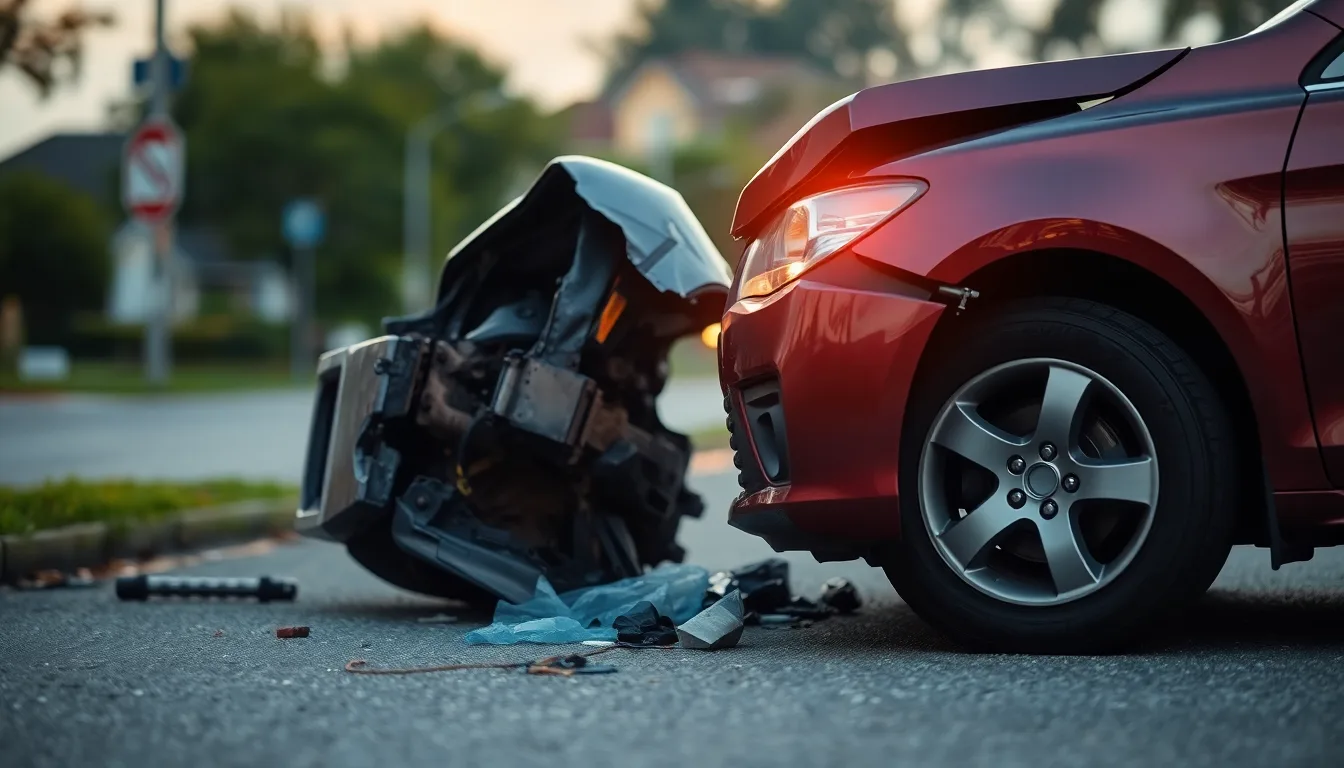
- Drunk driving is considered negligence per se, making it easier to prove fault.
- You may also seek punitive damages to punish the driver.
- You have a limited time (statute of limitations) to file—usually 1-3 years depending on your state.
Getting hit by a drunk driver turns your life upside down. You're dealing with injuries, medical bills, car repairs, and insurance headaches. On top of that, you may feel angry and frustrated that someone else's reckless choice caused this harm.
A drunk driving accident injury claim lets you seek compensation for your losses. Unlike criminal charges, which punish the driver, a civil claim puts money in your pocket to cover what you've been through. This article walks you through everything you need to know about these claims—from proving fault to calculating damages to navigating insurance.
Remember, every case is different, and this is general information, not legal advice. You should talk to an experienced attorney about your specific situation.
What Is a Drunk Driving Accident Injury Claim?
A drunk driving accident injury claim is a type of personal injury claim filed against a driver who caused an accident while under the influence. You can file this claim against the driver's insurance or directly against the driver themselves.
The goal is to recover compensation car accident victims deserve—money for medical treatment, lost income, pain and suffering, and other losses. Because drunk driving is illegal and inherently dangerous, these claims often allow for punitive damages, which are designed to punish the driver and deter similar behavior.
Unlike a simple rear-end collision, a drunk driving claim carries an extra layer of legal weight. The driver's decision to get behind the wheel after drinking is a conscious choice, not mere carelessness.
Courts and juries tend to view drunk driving with strong disapproval. This can work in your favor when negotiating a settlement or presenting your case at trial.
Why Drunk Driving Accidents Are Different in Civil Court

Drunk driving cases stand out from ordinary car accident claims. Here's why:
- Negligence per se: In most states, if the driver was over the legal BAC limit (0.08%) and caused the crash, they are automatically considered negligent. You don't have to prove they were careless—their drunk driving itself proves fault.
- Criminal vs. civil: The driver may face criminal charges like DUI, but that's separate from your civil case. You can pursue both simultaneously.
- Punitive damages: Because drunk driving is willful and wanton misconduct, courts often allow extra damages meant to punish the wrongdoer.
These factors make your automobile accident claim stronger, but it doesn't mean you'll automatically get paid. Insurance companies still fight to minimize payouts.
The negligence per se rule simplifies your case significantly. You do not need to hire an expert to explain what a reasonable driver would have done.
Instead, you only need to show that the driver was over the legal limit and that their intoxication caused the crash. That alone establishes fault in the eyes of the law.
How BAC Levels Affect Your Claim
Blood alcohol concentration, or BAC, is measured as a percentage. A BAC of 0.08% is the legal threshold in every state for adults.
Higher BAC levels can strengthen your claim. If the driver had a BAC of 0.15% or more, that is often considered aggravated drunk driving.
Some states impose harsher civil penalties for extremely high BAC levels. Your attorney can use the exact BAC reading to show the driver's extreme recklessness, which supports a claim for punitive damages.
What Damages Can You Recover in a Drunk Driving Injury Claim?
Economic damages cover tangible losses. These are easier to calculate because you have receipts and bills.
- Medical expenses (ambulance, ER, surgery, rehab, future care)
- Lost wages and reduced earning capacity
- Property damage (car repair or replacement)
- Out-of-pocket costs (travel to appointments, home modifications)
Non-economic damages compensate for subjective losses. They're harder to put a dollar sign on but just as real.
- Pain and suffering
- Emotional distress
- Loss of enjoyment of life
- Loss of consortium (impact on your relationship)
Punitive damages are available in drunk driving cases. These are not tied to your actual losses. They're meant to punish the driver and send a message.
Some states cap punitive damages; others don't. Your attorney can tell you if punitive damages apply in your state.
To learn more about what a case might be worth, see our guide on car accident settlement values.
Medical Expenses and Future Care
Your medical damages include everything from the ambulance ride to ongoing physical therapy. If you need surgery, that cost is included too.
Future medical care is often the largest part of a serious injury claim. For example, a spinal cord injury may require years of rehabilitation and home modifications.
Your attorney will work with medical experts to project these future costs. This ensures that your settlement or verdict covers your needs long after the case ends.
Lost Wages and Lost Earning Capacity
If your injuries keep you out of work, you can claim the income you lost during recovery. You will need pay stubs, tax returns, or a letter from your employer as proof.
If your injuries are permanent and prevent you from returning to your previous job, you may also claim lost earning capacity. This covers the difference between what you could earn before the accident and what you can earn now.
For example, a construction worker who suffers a traumatic brain injury may no longer be able to work in physically demanding roles. The claim would account for that long-term reduction in income.
How Does the Criminal Case Affect Your Civil Claim?
You may wonder if you have to wait until the criminal DUI case finishes before filing your civil injury claim. The short answer is no. You can file your civil case right away, even while the criminal case is pending.
In fact, it's often beneficial to start early. Evidence gathered by police (breathalyzer results, field sobriety tests) can help your civil case. A criminal conviction can also make it much easier to prove the driver was drunk—this is called collateral estoppel.
However, the driver may plead the Fifth in a civil deposition if the criminal case is still open. This can slow things down a bit, but it's manageable.
Your civil case is independent of the criminal one. Don't wait for a criminal outcome to protect your rights.
What Happens if the Driver Is Acquitted in Criminal Court
Even if the driver is found not guilty of DUI, you can still win your civil case. The burden of proof in a civil case is much lower.
In a criminal trial, the prosecutor must prove guilt beyond a reasonable doubt. In a civil case, you only need to prove your case by a preponderance of the evidence—meaning it is more likely than not that the driver was drunk.
This is a significant advantage. A criminal acquittal does not bar you from recovering compensation in your personal injury lawsuit.
The Role of Insurance: Who Pays?
In most drunk driving accident injury claims, the primary source of compensation is the at-fault driver's insurance. But there can be complications.
- Liability coverage: The driver's insurance pays up to their policy limit. If they have minimum coverage (like $25,000), that may not be enough.
- Underinsured/uninsured motorist coverage: Your own policy may step in if the drunk driver has low limits. This is optional in many states, but worth checking.
- Umbrella policies: Some drivers carry extra liability insurance for large claims.
- Denial of coverage: Some insurers try to deny coverage arguing that drunk driving is intentional. Courts often reject this because drunk driving is negligent, not intentional.
If insurance isn't enough, you can sue the driver personally. But collecting from an individual may be difficult if they lack assets.
Understanding Policy Limits
Every insurance policy has a maximum payout limit. If the drunk driver has a $50,000 policy but your damages are $200,000, the insurance will only pay $50,000.
That is where your own underinsured motorist coverage comes in. If you carry that coverage, your insurer may pay the remaining $150,000 up to your policy limit.
Check your auto insurance policy today to see if you have UM/UIM coverage. If you do not, consider adding it for future protection.
What If the Drunk Driver Has No Insurance
Some drunk drivers are uninsured. In that situation, your own uninsured motorist coverage can step in to pay your damages.
If you do not have UM coverage, your options may be limited to suing the driver personally. That route is often unsuccessful if the driver has no significant assets.
This is why having uninsured motorist coverage is critical. It acts as a safety net when the at-fault driver has no insurance at all.
Comparative Negligence in Drunk Driving Accidents
Even if you were partly at fault, you can still recover. Most states use comparative negligence rules. Your compensation is reduced by your percentage of fault.
For example, if you were 10% at fault (say, failing to signal), you'd get 90% of the damages.
Some states have a 50% or 51% bar—if you're more than half at fault, you get nothing. But even then, drunk driving is so egregious that juries rarely assign much fault to the victim.
Don't assume you can't file a personal accident claim because you made a small mistake. Let an attorney evaluate your case.
Pure vs. Modified Comparative Negligence
There are two main types of comparative negligence rules. In pure comparative negligence states, you can recover even if you are 99% at fault, though your recovery is reduced by your share of fault.
In modified comparative negligence states, you are barred from recovery if your fault exceeds a certain threshold, usually 50% or 51%. Your attorney will know which rule applies in your state.
Drunk driving cases are unique because the driver's intoxication is often seen as the primary cause of the crash. Even if you made a minor mistake, a jury may still assign most of the fault to the drunk driver.
How Long Do You Have to File a Drunk Driving Injury Claim?
The statute of limitations varies by state. Typically, it's 1 to 3 years from the date of the accident for personal injury. For property damage, it may be different.
If you miss the deadline, you lose your right to sue forever. That's why it's crucial to act quickly. Talk to a lawyer soon after the accident, even if you're still healing.
Exceptions exist: if the driver flees the state or if the victim is a minor, the clock may pause. But don't rely on exceptions.
Why You Should Not Wait to File
Waiting too long can hurt your case even if the statute of limitations has not expired. Witnesses may forget details, and evidence like surveillance footage may be lost.
Insurance companies may also view a delay as a sign that your injuries are not serious. Filing promptly shows that you are serious about your claim.
If you are unsure about the deadline in your state, consult an attorney immediately. Missing the deadline by even one day can bar you from recovery forever.
Do You Need a Lawyer for a Drunk Driving Accident Injury Claim?
While you can handle an accident claims process alone, drunk driving cases are complex. Insurance companies fight harder because of the high stakes. A lawyer can:
- Gather and preserve evidence (police reports, toxicology results)
- Calculate the full value of your claim (including future losses)
- Negotiate with insurance adjusters who may try to lowball you
- Take the case to trial if needed
Most personal injury lawyers work on contingency—they only get paid if you win. That means you don't pay upfront. Given the complexity, having a lawyer can make a huge difference in the outcome.
What to Look for in a Lawyer
When hiring a lawyer, look for someone with specific experience handling drunk driving injury claims. Not all personal injury lawyers have the same depth of experience.
Ask about their track record with punitive damages and DUI-related cases. You want a lawyer who knows how to use the criminal evidence to strengthen your civil claim.
Most initial consultations are free. Use that meeting to ask questions and decide if the lawyer is a good fit for your case.
How Long Does It Take to Settle a Drunk Driving Accident Injury Claim?
Timelines vary widely. Simple cases with clear liability and minor injuries may settle in a few months. Complex cases involving severe injuries, disputed fault, or punitive damages can take a year or more.
If the case goes to trial, expect 18-24 months from filing to verdict, depending on court dockets. Most cases settle before trial.
For a more detailed look, read our article on how long does a car accident settlement take.
Factors That Affect Timeline
The severity of your injuries is the biggest factor. If you are still receiving medical treatment, your lawyer will likely wait until you reach maximum medical improvement before settling.
Maximum medical improvement means your condition has stabilized and your doctors can give a reliable prognosis. Waiting ensures that your settlement accounts for all future medical needs.
Another factor is whether the insurance company is willing to negotiate in good faith. If they offer a lowball amount, your lawyer may need to file a lawsuit to pressure them into a fair settlement.
Average Settlement Amounts for Drunk Driving Accident Injury Claims
There's no fixed average because each case is unique. Settlements depend on:
- Severity of injuries
- Medical expenses
- Lost income
- Pain and suffering
- Insurance limits
- Punitive damages (if available)
Minor injuries with soft tissue damage might settle for $10,000 to $25,000. Moderate injuries like fractures could bring $50,000 to $100,000. Severe injuries like spinal cord damage or traumatic brain injury can result in settlements over $1 million.
For more detailed ranges, check our page on average car accident settlement amount. Remember, these are illustrative; your case may be different.
Why Punitive Damages Can Increase Settlements
Punitive damages are designed to punish the driver for egregious behavior. In drunk driving cases, these damages can significantly increase the total payout.
For example, a case with $100,000 in actual damages might see an additional $200,000 in punitive damages if the driver's BAC was extremely high or if they had prior DUI convictions.
Some states cap punitive damages at a multiple of the actual damages, such as three times the compensatory amount. Your attorney can explain the specific rules in your state.
Steps to Take After a Drunk Driving Accident
- Call 911 immediately. Report the accident and any suspicion of drunk driving.
- Seek medical attention even if you feel fine. Some injuries appear later.
- Gather evidence: Take photos, get witness contact info, and keep copies of medical bills and police reports.
- Notify your insurance company but be careful what you say—don't admit fault.
- Contact a personal injury lawyer who handles drunk driving cases.
- Keep a journal of your recovery, pain levels, and how the injury affects your daily life.
Also, avoid posting about the accident on social media. Insurance adjusters may use your posts against you.
What to Say to the Police at the Scene
When the police arrive, tell them exactly what happened. Do not speculate about fault or say things like "I didn't see him coming."
If you suspect the other driver is drunk, tell the officer calmly and clearly. Mention any signs you noticed, such as the smell of alcohol, slurred speech, or erratic driving.
Let the police conduct their investigation. They will administer field sobriety tests and possibly a breathalyzer to the other driver.
Preserving Evidence for Your Case
Evidence can make or break your drunk driving injury claim. The police report is the most important piece of evidence because it documents the officer's observations.
Request a copy of the police report as soon as it is available. Also, ask your lawyer to obtain any dashcam footage or surveillance video from nearby businesses.
If you have photos of the scene, keep them organized and backed up. Photos of the vehicles, skid marks, and the driver's condition at the scene can all be valuable.
The Emotional and Psychological Impact of Drunk Driving Accidents
Injuries from a drunk driving accident are not just physical. Many victims suffer from anxiety, depression, and post-traumatic stress disorder after the crash.
You may have trouble sleeping, feel afraid to drive, or experience flashbacks to the accident. These psychological effects are real and compensable in your claim.
Non-economic damages include compensation for emotional distress. You do not need a psychiatric diagnosis to claim this, but documentation from a therapist can strengthen your case.
How to Document Emotional Distress
Keep a journal of your emotional state each day. Write down moments when you feel anxious, scared, or overwhelmed because of the accident.
Note any activities you used to enjoy but now avoid. For example, if you loved cycling before the accident but now cannot ride without panic, write that down.
Your attorney can use this journal to help the insurance company or jury understand the full impact of the accident on your quality of life.
When to Seek Professional Help
If you are struggling emotionally after a drunk driving accident, consider speaking with a therapist or counselor. Professional help can improve your recovery and quality of life.
Your treatment records can also serve as evidence of emotional distress in your claim. Insurance companies take documented therapy more seriously than vague complaints.
Do not suffer in silence. Seeking help is a sign of strength and can also support your legal case.
Special Considerations for Catastrophic Injuries in DUI Accidents
Drunk driving accidents often cause catastrophic injuries because of the high speeds and lack of braking. Common catastrophic injuries include traumatic brain injury, spinal cord injury, and multiple fractures.
These injuries require extensive medical treatment and may result in permanent disability. The compensation needed for such cases is often very high.
If you have suffered a catastrophic injury, your lawyer will work with life care planners and medical experts to calculate the full cost of your future care. This can include home modifications, in-home nursing, and lost income for decades.
Life Care Plans and Future Damages
A life care plan is a detailed document that outlines all of your future medical and personal care needs. It is prepared by a specialist who considers your injury, age, and life expectancy.
For example, a victim with a spinal cord injury may need a wheelchair-accessible van, a modified home, and ongoing physical therapy. The life care plan calculates the cost of each item.
This plan is then presented to the insurance company or jury to justify a large settlement or verdict. It ensures that you are not left without resources years down the road.
How to Deal with Insurance Adjusters After a Drunk Driving Accident
Insurance adjusters are trained to protect their company's bottom line. They may seem friendly, but their goal is to pay you as little as possible.
After a drunk driving accident, you will likely receive a call from the at-fault driver's insurance company. They may ask for a recorded statement or try to get you to accept a quick settlement.
Do not give a recorded statement without your lawyer present. Anything you say can be twisted to minimize your claim.
What Not to Say to an Adjuster
Never say "I'm fine" or "It wasn't that bad." Even a casual comment can be used to argue that your injuries are minor.
Do not speculate about fault. If the adjuster asks whether you saw the other car, say you will let your attorney handle the details.
Stick to the basic facts: you were in an accident, you were injured, and you have a lawyer representing you. Then refer all further calls to your attorney.
The Danger of a Quick Settlement
Insurance companies often offer a quick settlement soon after the accident. This may seem appealing because you need money for bills.
However, early settlement offers are almost always too low. They do not account for future medical expenses, ongoing pain, or lost earning capacity.
Once you accept a settlement, you cannot ask for more money later. Always consult a lawyer before signing any settlement agreement.
Proving Fault in a Drunk Driving Accident Case
Even with the negligence per se rule, you still need to prove that the drunk driver caused the accident. Causation is a separate element from intoxication.
You must show that the driver's intoxication led to the crash. For example, if the driver ran a red light and hit you, their impaired judgment likely caused that action.
Your attorney will gather evidence such as police reports, witness statements, and accident reconstruction analysis to establish causation.
Using Accident Reconstruction Experts
In complex cases, your lawyer may hire an accident reconstruction expert. This expert analyzes the physical evidence to determine how the crash happened.
They can calculate vehicle speeds, braking distances, and impact angles. Their testimony can show that the drunk driver had ample time to avoid the crash if they had been sober.
This type of expert testimony can be very persuasive to a jury. It bridges the gap between the driver's intoxication and the actual collision.
Key Takeaways
- Drunk driving injury claims are stronger due to negligence per se and possibility of punitive damages.
- You can recover medical expenses, lost wages, pain and suffering, and sometimes punitive damages.
- Act quickly—statute of limitations is short. Consult a lawyer as soon as possible.
- Don't let a criminal case delay your civil claim; they proceed separately.
- Insurance coverage may limit what you can recover; check your own UM/UIM policy.
- For a free evaluation, speak with an experienced attorney in your state.
For more information on drunk driving statistics, visit the NHTSA's drunk driving page.
Frequently Asked Questions
Can I sue a drunk driver even if they are criminally charged?
Yes. A criminal case is separate from a civil case. You can file a personal injury lawsuit regardless of whether the driver is convicted of DUI.
What is the average settlement for a drunk driving accident injury claim?
Settlements vary widely. Minor injuries may settle for $10,000–$25,000; severe injuries can exceed $1 million. Factors include medical costs, lost income, pain, and insurance limits.
How long do I have to file a drunk driving injury claim?
Statutes of limitations range from 1 to 3 years depending on your state. Talk to a lawyer quickly to avoid missing the deadline.
Can I get punitive damages in a drunk driving accident case?
Yes, in most states. Since drunk driving is willful misconduct, courts often allow extra damages to punish the driver and deter others.
What if I was partly at fault for the accident?
You may still recover under comparative negligence rules. Your compensation is reduced by your percentage of fault. A lawyer can help determine how your state's rules apply.
Do I have to go to court for a drunk driving injury claim?
Most cases settle out of court. However, if the insurance company refuses to offer a fair amount, your lawyer may recommend filing a lawsuit and taking the case to trial.
Can I claim compensation for emotional distress after a drunk driving accident?
Yes. Emotional distress is part of non-economic damages. Keep a journal and seek therapy if needed to document your psychological injuries.
What happens if the drunk driver dies in the accident?
You can still file a claim against the driver's estate. Their insurance policy may also cover the accident. An attorney can guide you through this process.
Frequently asked questions
Can I sue a drunk driver even if they are criminally charged?
What is the average settlement for a drunk driving accident injury claim?
How long do I have to file a drunk driving injury claim?
Can I get punitive damages in a drunk driving accident case?
What if I was partly at fault for the accident?
This article is for general informational purposes only and does not constitute legal advice. Always consult a qualified professional about your specific circumstances.

Written & reviewed by
Can OTUConsumer Legal Information Researcher & Editor
Can OTU researches and edits every guide on this site, drawing on primary legal sources, court records, and state statutes to produce accurate, plain-English explanations of U.S. compensation and personal injury claims.
View all guides →