Workers' Comp Scams: How to Protect Yourself as an Injured Worker

- Scammers pose as lawyers or doctors to steal your identity or settlement money.
- Never sign documents without reading them or give out personal information over the phone.
- Report suspected fraud to your state's workers' compensation board or the National Insurance Crime Bureau.
If you've been injured at work, you're likely focused on recovery and getting your filing a workers comp claim processed. But there's another threat you might not see coming: scammers who target injured workers. These fraudsters know you're vulnerable and may try to steal your benefits, your identity, or both.
This article walks you through the most common workers' comp scams, how to spot them, and exactly what steps to take to protect yourself. You'll learn how to safeguard your workers compensation claim and avoid becoming a victim.
What Are Workers' Comp Scams?
Workers' comp scams are schemes designed to defraud injured workers, employers, or insurance companies. Some scams involve fake attorneys who take your money and disappear. Others involve medical providers who bill for unnecessary treatments or share your personal data.
And some target your settlement directly—promising to get you more money but instead taking a huge cut or stealing the whole thing.
These scams are more common than you might think. According to the National Insurance Crime Bureau, workers' compensation fraud costs the system billions of dollars each year. And injured workers are often the primary victims.
Scammers exploit the complexity of the workers' comp system. They know that injured workers are often overwhelmed by paperwork, medical appointments, and financial stress. This makes you an easy target for someone who seems helpful but has bad intentions.
For example, a scammer might call you pretending to be from your insurance company. They say they need to "verify" your claim details to speed up your benefits. But instead, they steal your Social Security number and use it to open credit cards in your name.
Another common scenario involves a fake attorney who promises to get you a huge settlement quickly. They ask for a small upfront fee to "start the paperwork." After you pay, they vanish, and you never hear from them again.
How to Protect Yourself: A Step-by-Step Guide

Step 1: Verify Every Professional You Work With
Before you hire an attorney or see a doctor for your work injury, check their credentials. For lawyers, look up their license status with your state bar association. For doctors, verify their license through your state medical board.
Scammers often use names that sound like real law firms or medical practices. They may even have professional-looking websites. But a quick phone call to the state bar or medical board can confirm whether they're legit.
Take the time to do a background check. Search online for reviews and complaints. Look for any disciplinary actions or malpractice claims.
A legitimate professional will have a verifiable history and a physical office address.
For example, imagine you receive a flyer from "Smith & Associates Law Firm" offering free consultations. You call the number, and the person sounds professional. But when you check your state bar website, you find no record of any attorney named Smith licensed in your state.
That is a clear red flag.
Step 2: Never Sign Blank or Incomplete Documents
One of the most common scams is getting you to sign a blank medical release or settlement agreement. The scammer later fills in terms that give them access to your benefits or assign your settlement to them.
Always read every document carefully. If something is blank, ask why. Never sign under pressure.
A legitimate attorney or doctor will never ask you to sign incomplete paperwork.
Scammers may tell you that signing a blank form is just a "formality" or that they will fill in the details later. Do not believe this. Once you sign, you have given them legal authority to act on your behalf.
Consider this example: A so-called "claims consultant" asks you to sign a blank medical release form. They say it will help them gather your records faster. Instead, they use the form to get your entire medical history and sell it to a marketing company.
You never receive the promised help.
Step 3: Be Wary of Unsolicited Offers
If someone calls, emails, or shows up at your door offering to help with your workers comp claim—especially if they ask for money upfront—be suspicious. Legitimate professionals don't cold-call injured workers.
Scammers often get your information from accident reports or social media. They may promise you a big settlement quickly. But real workers' comp cases take time, and no one can guarantee a specific outcome.
For instance, you might post about your work injury on Facebook. A scammer sees your post and sends you a private message offering to "expedite your claim" for a small fee. They claim to have inside connections at the insurance company.
This is almost always a lie.
Another example: You receive a phone call from someone who says they are from "Workers' Comp Advocates." They say they have a special program that can double your settlement. They ask for your claim number and bank account details to "process the payment." Hang up immediately.
Step 4: Don't Pay Upfront Fees for Claim Help
Most workers compensation injury lawyers work on a contingency fee basis—they only get paid if you win. If someone demands a fee before they've done any work, that's a red flag.
Similarly, be cautious of medical providers who ask for payment before treating you. Workers' comp medical benefits are typically paid by the insurance company, not out of your pocket.
Some scammers ask for a "retainer" or "processing fee" to start working on your case. They may say it covers administrative costs or filing fees. In reality, these fees are unnecessary and often illegal for workers' comp claims.
For example, a fake attorney tells you that you need to pay $500 to "file your claim with the state." But filing a workers' comp claim is free. You can do it yourself or with a legitimate attorney who works on contingency. The $500 goes straight into the scammer's pocket.
Step 5: Protect Your Personal Information
Scammers want your Social Security number, date of birth, bank account details, and workers' comp claim number. They can use this information to steal your identity or redirect your benefits.
Only share personal information with professionals you've verified. Never give it over the phone to an unsolicited caller. If you're unsure, ask for a callback number and verify it independently.
Identity theft can have long-lasting consequences. A scammer might use your Social Security number to file a fraudulent tax return or open new credit accounts. You may not discover the theft until months later, when your credit score drops or you receive bills for services you never received.
To protect yourself, never provide your claim number to anyone who contacts you out of the blue. Legitimate insurance adjusters will already have your claim number. They do not need to ask you for it.
Step 6: Watch for Medical Mills
Some clinics specialize in treating workers' comp patients but provide unnecessary or low-quality care. They may bill for services you didn't receive or refer you to other providers in their network who also overbill.
If a doctor orders excessive tests or treatments without clear medical necessity, get a second opinion. You have the right to choose your own doctor in most states, especially after an initial period.
Medical mills often use high-pressure tactics. They may tell you that you need expensive MRI scans, physical therapy multiple times a week, or surgery. But these treatments may not be necessary for your injury.
The clinic's goal is to maximize billing, not to help you recover.
For example, you sprain your ankle at work. A medical mill insists you need an MRI, X-rays, and six weeks of physical therapy. A second opinion from a reputable doctor confirms that rest and ice are sufficient.
The medical mill's excessive billing could trigger an investigation into your claim, delaying your benefits.
Step 7: Be Careful with Settlement Advances
Some companies offer cash advances against your future workers' comp settlement. These often come with extremely high interest rates and fees. You might end up with much less money in the end.
If you need financial help while your claim is pending, look into state disability benefits or other assistance programs instead. Avoid signing over your settlement rights.
Settlement advance companies prey on injured workers who are desperate for money. They offer you a lump sum now, but you must repay it from your settlement later. The interest rates can be as high as 50% or more, leaving you with very little after the advance is repaid.
For instance, you are offered a $2,000 advance on a $10,000 settlement. The company charges a 40% fee, so you owe $2,800. When your settlement comes through, you receive only $7,200.
You paid $800 for the privilege of getting your own money early.
Step 8: Report Suspected Fraud
If you think you've been targeted by a scam, report it. Contact your state's workers' compensation board or the National Insurance Crime Bureau at 1-800-TEL-NICB. You can also report to the Federal Trade Commission at ftc.gov.
Reporting helps protect other injured workers. You won't get in trouble for reporting a scam—even if you're not sure it's fraud.
Many states have fraud hotlines specifically for workers' comp. You can report anonymously if you prefer. The information you provide can help authorities investigate and shut down scam operations.
For example, you receive a suspicious call from someone claiming to be a claims adjuster. You hang up and report the number to your state's workers' comp board. Investigators trace the number to a known fraud ring and stop them from targeting other workers.
Common Workers' Comp Scams to Know
Fake Attorney Scams
Scammers pose as lawyers and offer to handle your workers comp lawsuit. They may take your case file and an upfront fee, then disappear. Or they may settle your case for a low amount and keep most of the money.
Always verify an attorney's license through your state bar. A legitimate lawyer will not ask for payment before providing services.
Fake attorneys often target workers with limited English skills or those who are unfamiliar with the legal system. They may promise to handle everything and tell you not to worry. But they are only interested in your money.
For example, a worker from Mexico is injured on the job. A fake attorney who speaks Spanish offers to help for a $1,000 fee. The worker pays, but the attorney never files any paperwork.
The worker misses the deadline to file a claim and loses all benefits.
Medical Provider Fraud
Some doctors bill for treatments you never received or exaggerate your injuries to justify more expensive care. This can lead to your claim being denied or investigated.
If you suspect your doctor is overbilling, request copies of all medical records and bills. Compare them with what you actually experienced.
Medical fraud can also involve "upcoding," where a provider bills for a more expensive service than what was actually performed. For example, a doctor bills for a comprehensive physical exam when you only had a brief consultation. This inflates the cost of your care and can trigger a fraud investigation.
Another example: A chiropractor bills for 20 sessions of spinal manipulation, but you only attended 10. The extra billing is pure profit for the clinic. If the insurance company catches this, they may deny your entire claim for fraud.
Settlement Scams
Scammers may promise to get you a larger settlement if you sign over your rights to them. They might offer a quick lump sum in exchange for your future benefits. This is almost always a bad deal.
Never assign your settlement to a third party without independent legal advice. Consult a trusted attorney first.
Settlement scams often involve "structured settlement buyers" who offer to buy your future payments for a lump sum now. They may pay you far less than the total value of your settlement. You lose the security of ongoing payments and may end up with less money overall.
For example, you are entitled to $50,000 in future medical benefits. A scammer offers you $20,000 cash today in exchange for those rights. You take the money, but later you need expensive surgery that is no longer covered.
You are left with a $30,000 loss.
Identity Theft via Claim Forms
Some scammers obtain your personal information by posing as a claims adjuster or employer representative. They may ask you to "verify" your details over the phone or through a fake website.
Always confirm the identity of anyone requesting your information. Call your employer or insurance company directly using a known phone number.
Identity theft can happen through phishing emails that look like they are from your workers' comp carrier. The email may ask you to click a link and enter your login credentials. The link takes you to a fake site that captures your information.
For instance, you receive an email that appears to be from your insurance company. It says your claim is on hold and you need to verify your Social Security number. You click the link and enter your details.
The scammer now has everything they need to steal your identity.
What to Do If You've Been Scammed
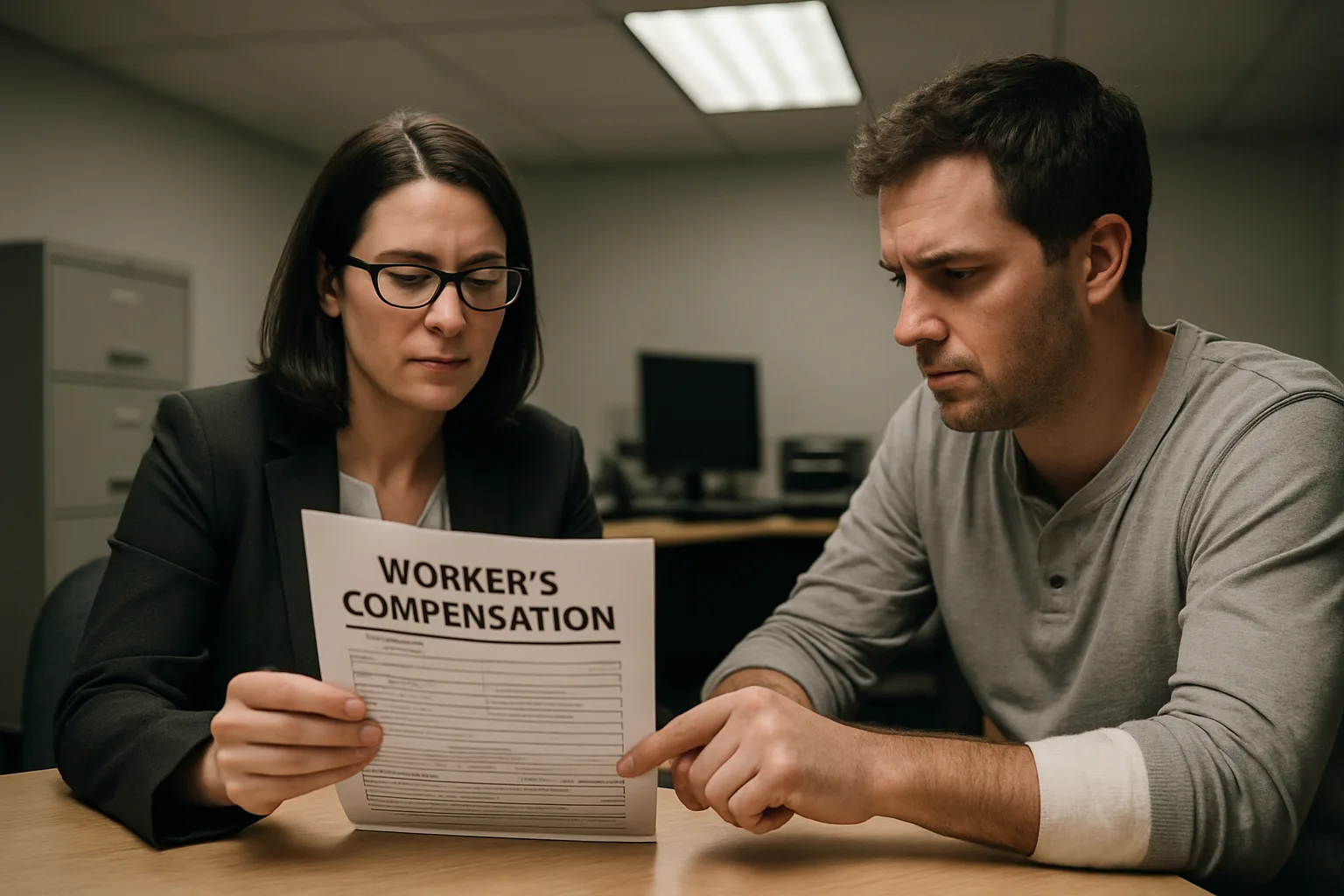
If you realize you've fallen for a scam, act quickly. First, contact your bank or credit card company to stop any payments. Then, file a report with your local police and the Federal Trade Commission at IdentityTheft.gov.
Notify your workers' compensation insurance carrier and your employer. They may be able to protect your claim from further fraud. Finally, contact a legitimate workers compensation injury lawyers to discuss your options.
Remember, being scammed is not your fault. Scammers are skilled at what they do. The important thing is to take action to limit the damage.
You should also place a fraud alert on your credit reports. Contact one of the three major credit bureaus—Equifax, Experian, or TransUnion—and ask them to add an alert. This makes it harder for scammers to open new accounts in your name.
For example, after giving your Social Security number to a scammer, you place a fraud alert. A few weeks later, someone tries to open a credit card in your name. The credit bureau flags the application and denies it.
Your quick action prevented further harm.
How to Choose a Legitimate Workers' Comp Attorney
When you need legal help, choose carefully. Look for an attorney who specializes in workers' compensation law. Check their reviews on sites like Avvo or Martindale-Hubbell.
Ask about their experience with cases like yours.
A good attorney will offer a free initial consultation and explain their fees clearly. They should not pressure you to sign anything immediately. They should also be willing to answer your questions about the process.
You can also ask for referrals from friends, family, or your state bar association. Avoid attorneys who advertise aggressively on TV or billboards without a strong reputation.
During the consultation, ask specific questions. How many workers' comp cases have they handled? What is their success rate?
How long do they expect your case to take? A legitimate attorney will give you honest answers, not empty promises.
For example, you meet with an attorney who has handled hundreds of workers' comp cases. They explain that your case might take six months to a year. They offer a contingency fee of 25% of your settlement.
You feel confident because they are transparent and experienced.
In contrast, another attorney promises a $100,000 settlement in two weeks. They demand a $2,000 upfront fee. This is a clear red flag.
You walk away and choose the first attorney.
Your Rights as an Injured Worker
You have the right to get workers compensation benefits for medical expenses and lost wages after a work injury. You also have the right to choose your own doctor in most states after an initial period. And you have the right to appeal if your claim is denied.
Scammers try to take advantage of these rights. But by staying informed and cautious, you can protect yourself. Remember, no one can guarantee a specific settlement amount.
Be skeptical of anyone who promises quick money.
If you're unsure about any step in the process, consult a verified professional. It's better to ask questions than to lose your benefits.
Your rights also include the right to a safe workplace. If you are injured, your employer must report the injury to their insurance carrier. You cannot be fired for filing a workers' comp claim in most states.
Scammers may try to convince you otherwise to pressure you into a bad deal.
For example, a scammer tells you that if you don't accept their settlement offer, your employer will fire you. This is a lie. You have legal protections against retaliation.
A legitimate attorney can help you enforce those rights.
The Role of Insurance Companies in Fraud Prevention
Insurance companies also work to detect and prevent workers' comp fraud. They have special investigation units (SIUs) that review suspicious claims. If a scammer tries to defraud you, the insurance company may catch it.
However, insurance companies are not always on your side. They may deny legitimate claims if they suspect fraud. That is why it is important to work with a trusted attorney who can advocate for you.
For instance, a medical mill bills your insurance company for unnecessary treatments. The SIU investigates and finds the fraud. The insurance company may deny all claims from that clinic, including legitimate ones.
Your attorney can help ensure that your necessary medical care is still covered.
You can also help by keeping detailed records of your medical appointments and treatments. If the insurance company questions your claim, you have proof of what actually happened.
How Scammers Target Vulnerable Workers
Scammers often target workers who are in high-risk industries, such as construction, manufacturing, or agriculture. These workers may have language barriers or limited access to legal resources. Scammers know that these workers are less likely to question authority.
If you work in a high-risk industry, be extra cautious. Do not sign anything without understanding it. Ask a trusted coworker or family member to review documents with you.
For example, a construction worker who speaks only Spanish is approached by a "translator" who offers to help with his claim. The translator charges a fee and then disappears with the worker's documents. The worker misses the filing deadline and loses his benefits.
Another example: A farmworker is injured and visited by a "claims representative" at home. The representative says he can get the worker a quick settlement if he signs a release. The worker signs, but the settlement is far less than what he is entitled to.
The representative keeps a large commission.
To protect yourself, always verify the identity of anyone who approaches you. Ask for identification and a business card. Call the company they claim to represent to confirm their employment.
How to Spot a Scam Before It Happens
There are warning signs that can help you spot a scam early. If something feels off, trust your instincts. Scammers often create a sense of urgency to pressure you into making a quick decision.
Common red flags include unsolicited contact, requests for upfront payment, and promises of guaranteed results. Also be wary of anyone who asks you to sign documents without reading them or who pressures you to keep the deal secret.
For example, a caller says, "This offer is only available today. You must sign now or lose your chance." This is a classic scam tactic. Legitimate professionals will give you time to think and consult with others.
Another red flag is when someone asks you to pay in gift cards or wire transfers. These payment methods are nearly impossible to trace. Legitimate businesses accept credit cards, checks, or bank transfers.
If you encounter any of these warning signs, stop all communication. Do not provide any personal information. Report the incident to the authorities.
Key takeaways
- Workers' comp scams are real and target injured workers through fake attorneys, medical fraud, and settlement schemes.
- Protect yourself by verifying every professional, never signing blank documents, and safeguarding your personal information.
- If you suspect fraud, report it to your state board, the NICB, or the FTC.
- Choose a legitimate attorney who specializes in workers' comp and offers a free consultation.
- This article provides general information and is not legal advice. For specific questions, consult a qualified attorney.
Frequently asked questions
What are common workers' comp scams?
How can I spot a workers' comp scam?
What should I do if I think I've been scammed?
Can I get workers' compensation if I'm an undocumented worker?
How do I report a workers' comp scam?
This article is for general informational purposes only and does not constitute legal advice. Always consult a qualified professional about your specific circumstances.

Written & reviewed by
Can OTUConsumer Legal Information Researcher & Editor
Can OTU researches and edits every guide on this site, drawing on primary legal sources, court records, and state statutes to produce accurate, plain-English explanations of U.S. compensation and personal injury claims.
View all guides →