Why Are More Injured Workers Hiring Lawyers for Workers' Comp Claims — and Should You?

- Claim denial rates have increased, making legal representation more valuable.
- Attorneys handle complex medical evidence and appeals, boosting success rates.
- You may not need a lawyer for minor injuries, but if your claim is denied or you have permanent damage, hiring one is often worth the cost.
If you were hurt on the job, you've probably wondered: should I hire a lawyer for my workers' comp claim? It's a fair question. Workers' compensation is supposed to be a no-fault system — you get medical care and lost-wage benefits without having to prove your employer was negligent.
But the reality is often messier. Claim denials are common, paperwork is overwhelming, and insurance adjusters aren't on your side.
More injured workers than ever are turning to accident claims lawyers for help. According to industry data, the percentage of workers' comp claimants who hire an attorney has climbed from around 10% in the 1990s to nearly 30% today in some states. Why the jump?
It's not because workers are more litigious — it's because the system has become harder to navigate alone. This article walks you through the reasons behind the trend, when you should consider hiring a lawyer, and how to decide if legal help is right for you.
Remember, this article provides general information, not legal advice. Every case is different, so consult a qualified attorney for your specific situation.
Why Are More Workers Hiring Lawyers for Workers' Comp Claims?
The trend toward hiring a lawyer for a workers compensation claim isn't random. Several factors have converged to make legal representation more common — and more necessary.
1. Rising Claim Denial Rates
Insurance companies deny a significant portion of workers' comp claims — often 10% to 20% or more, depending on the state and type of injury. Denials happen for many reasons: the insurer argues the injury isn't work-related, you missed a deadline, or there's a dispute over medical evidence. Without a lawyer, fighting a denial means navigating a complex appeals process on your own.
Attorneys know the system, spot weak denial reasons, and push back effectively.
For example, consider a warehouse worker who develops chronic back pain after lifting heavy boxes. The insurer might deny the claim, arguing the pain is from a pre-existing condition. A lawyer can gather medical records and expert opinions to prove the work activity aggravated the injury.
This type of evidence often forces the insurer to reverse the denial. In many states, the success rate for appeals with legal representation is significantly higher than for unrepresented workers.
2. Complex Medical Evidence
Modern workers' comp cases often hinge on detailed medical reports. If you have a back injury, repetitive strain, or a condition like carpal tunnel, proving it's work-related requires solid medical evidence. Insurers hire their own doctors to downplay your injury.
A lawyer can help you get independent medical exams and present your case in the strongest light.
Imagine a data entry worker who develops carpal tunnel syndrome after years of typing. The insurer may send her to a company doctor who claims the condition is due to hobbies like knitting. An attorney can arrange an independent medical examination with a specialist who understands repetitive stress injuries.
This doctor's report can directly counter the insurer's narrative and strengthen the claim.
3. Higher Stakes for Permanent Injuries
If your injury leaves you with permanent damage — loss of function, chronic pain, or disability — the value of your claim skyrockets. You may be entitled to permanent partial disability benefits, vocational retraining, or even a lump-sum settlement. Insurers fight these claims hard.
Having a workers compensation injury lawyer on your side can mean the difference between a fair payout and a lowball offer.
Consider a construction worker who suffers a permanent knee injury that limits his ability to climb ladders. Without a lawyer, the insurer might offer a quick settlement of $10,000. An attorney can calculate the true cost of future medical care, lost earning capacity, and diminished quality of life.
That same claim could be worth $100,000 or more with proper legal representation.
4. Employer and Insurer Pushback
Some employers discourage workers from filing claims or retaliate against those who do. While retaliation is illegal, it happens. A lawyer can protect your rights and ensure you're not punished for exercising them.
Additionally, insurance adjusters are trained to minimize payouts. They may pressure you to accept a quick settlement that doesn't cover your long-term needs. An attorney levels the playing field.
For instance, a restaurant worker who slips on a wet floor might be told by her manager to "just go home and rest." The employer may try to avoid filing a report. A lawyer can step in, document the incident, and ensure the claim is properly submitted. If the employer later reduces the worker's hours in retaliation, the attorney can file a complaint with the state labor board.
When Should You Hire a Lawyer for a Workers' Comp Claim?

Not every workplace injury requires a lawyer. But certain red flags suggest you should at least consult one.
- Your claim was denied. If the insurer says no, you need an attorney to appeal.
- You have a permanent injury. Permanent disability benefits are complex; a lawyer ensures you get what you deserve.
- Your employer disputes that the injury happened at work. This is a common denial reason that often requires legal intervention.
- You're being pressured to settle quickly. A lawyer can advise you on the true value of your claim.
- You have a pre-existing condition that's been aggravated. Insurers often try to blame the old injury, not the work accident.
- You're considering a third-party lawsuit. If someone other than your employer caused your injury (e.g., a negligent driver or equipment manufacturer), you may have a separate claim. A lawyer can help you pursue both.
If your injury is minor — a sprain that heals in a few weeks with no lost time — you probably don't need a lawyer. But if you miss work, need surgery, or face any pushback, it's worth a consultation. Many accident claim lawyers near me offer free initial consultations, so you have nothing to lose by asking.
What Does a Workers' Comp Lawyer Do?
A good workers' comp attorney handles the legal heavy lifting so you can focus on recovery. Here's what they typically do:
- Evaluate your claim: They'll review the facts, medical records, and applicable laws to estimate your benefits.
- Gather evidence: This includes medical reports, witness statements, and accident scene documentation.
- Handle all paperwork: Workers' comp involves forms, deadlines, and filings. One missed step can delay or kill your claim.
- Negotiate with the insurer: Your lawyer will push for a fair settlement or fight for benefits at hearings.
- Represent you at hearings: If your case goes before a workers' comp judge, your attorney will present your case.
- Advise on third-party claims: If someone else caused your injury, your lawyer can help you file a separate lawsuit for additional compensation.
For example, in a case involving a factory worker who loses a finger in a machine, the lawyer might gather maintenance logs to prove the machine was defective. This evidence supports both the workers' comp claim and a potential product liability lawsuit against the manufacturer. The attorney coordinates these efforts to maximize the client's recovery.
How Much Does a Workers' Comp Lawyer Cost?
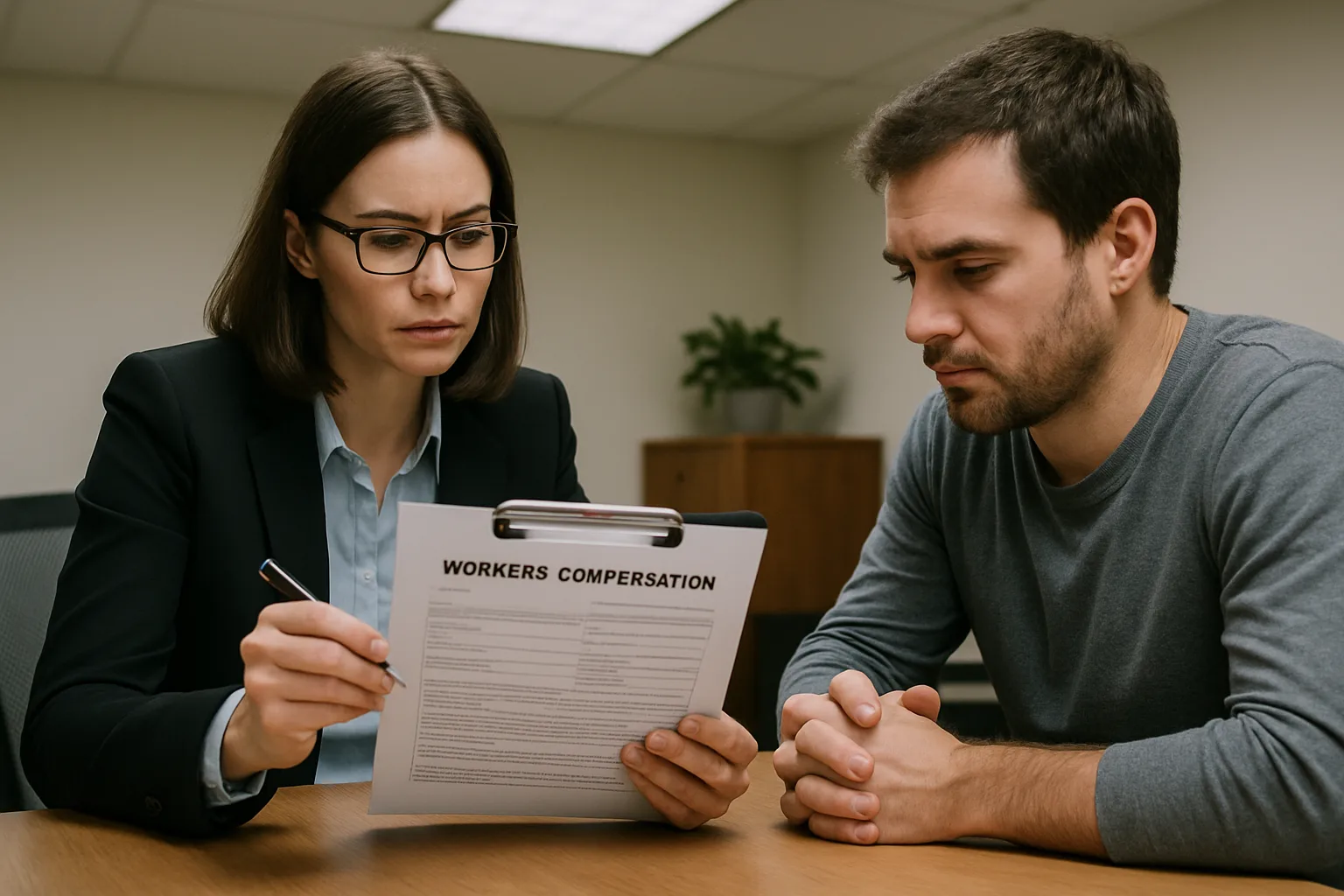
Most workers' comp attorneys work on a contingency fee basis. That means they only get paid if you win. The fee is typically a percentage of the benefits you recover — usually between 10% and 25%, depending on state law and the complexity of your case.
Some states cap the fee. For example, California limits attorneys' fees to 9% to 12% of the first $10,000 in benefits, then 9% to 15% of additional benefits.
This fee structure means you don't pay upfront. And if you lose, you owe nothing. That makes hiring a lawyer accessible even if you're out of work and short on cash.
Always ask about fees during your initial consultation so you know what to expect.
In some states, like Florida, attorney fees are strictly regulated and often paid by the insurer if you win. This can make legal representation even more affordable. Be sure to discuss the specific fee arrangement with any lawyer you consider.
Can You Handle a Workers' Comp Claim Without a Lawyer?
Yes, you can — and many people do. If your injury is minor, your claim is straightforward, and the insurer doesn't fight you, you might be fine on your own. But there are risks.
Without a lawyer, you might:
- Miss important deadlines (statutes of limitations vary by state, often 1-3 years from the injury date).
- Accept a settlement that doesn't cover future medical costs or lost earning capacity.
- Fail to gather sufficient medical evidence, leading to a denial.
- Misunderstand your rights, especially if your employer retaliates.
If you decide to go it alone, educate yourself. Start by reading our guide on filing a workers comp claim. But if you hit any roadblocks, don't hesitate to call a lawyer.
For instance, a retail worker with a minor ankle sprain might successfully file a claim without help. But if the ankle requires surgery and the insurer disputes the need, the worker could end up with unpaid medical bills. A lawyer can step in at any stage to correct course.
How to Find the Right Workers' Comp Lawyer
Choosing an attorney is a personal decision. Here are tips to find a good one:
- Look for specialization: You want a lawyer who focuses on workers' comp, not a general practice attorney who dabbles.
- Check experience: How many years have they handled workers' comp cases? Do they have trial experience?
- Read reviews: Look at Google, Avvo, or the state bar association for client feedback.
- Ask about communication: Will you speak directly with the lawyer or a paralegal? How quickly do they return calls?
- Trust your gut: During a free consultation, do you feel heard? Does the lawyer explain things clearly?
You can also search for accident claim lawyers near me to find local options. Local lawyers know your state's laws and judges, which can be a big advantage.
What If Your Workers' Comp Claim Is Denied?
A denial isn't the end of the road. You have the right to appeal. The process varies by state, but generally involves:
- Requesting a hearing before a workers' comp judge.
- Presenting evidence — medical records, witness testimony, expert opinions.
- Receiving a decision from the judge. If you lose, you may appeal to a higher board or court.
This is where a lawyer is invaluable. The appeals process is procedural and unforgiving. An attorney knows the rules and can build a strong case.
If you're considering an appeal, consult a lawyer immediately — deadlines are short.
For example, in New York, you have only 30 days to appeal a denial. A lawyer can file the necessary paperwork and gather new evidence, such as an independent medical exam, to support your case. Without legal help, many workers miss this window and lose their benefits permanently.
Can You Sue Your Employer Instead of Filing a Workers' Comp Claim?
Workers' comp is generally your exclusive remedy against your employer. That means you can't sue them for negligence — the trade-off is that you get benefits without proving fault. However, there are exceptions.
If your employer intentionally harmed you, or if they don't carry workers' comp insurance (which is illegal in most states), you might be able to file a workers comp lawsuit. Also, if a third party (not your employer or coworker) caused your injury, you can sue them separately. For example, if you're a delivery driver hit by a negligent driver, you can file a car accident claim against that driver.
In that case, you'd want car accident claim lawyers or lawyers car accident claim specialists.
Workers' Comp vs. Personal Injury: What's the Difference?
Many people confuse workers' comp with personal injury lawsuits. Here's a quick comparison:
| Factor | Workers' Comp | Personal Injury Lawsuit |
|---|---|---|
| Fault required? | No — no-fault system | Yes — must prove negligence |
| Who pays? | Employer's insurance | At-fault party's insurance |
| Damages available | Medical bills, lost wages, disability benefits | Medical bills, lost wages, pain and suffering, punitive damages |
| Can you sue your employer? | Generally no | Yes, if outside workers' comp |
| Time limit | Usually 1-3 years from injury | Varies, typically 1-6 years |
If you have both a workers' comp claim and a third-party claim (e.g., a car accident at work), you may need both workers compensation injury lawyers and accident claims lawyers — or one firm that handles both.
Common Myths About Hiring a Workers' Comp Lawyer
Let's clear up some misconceptions:
- Myth: Lawyers are too expensive. Most work on contingency, so you pay nothing upfront and only if you win.
- Myth: Hiring a lawyer will make the process longer. Actually, lawyers often speed things up by handling paperwork correctly and pushing for resolutions.
- Myth: My employer will fire me if I hire a lawyer. Retaliation is illegal. If it happens, your lawyer can sue for damages.
- Myth: I only need a lawyer if I go to court. Most cases settle without trial, but a lawyer's negotiation skills still matter.
- Myth: All lawyers are the same. Specialization matters. A workers' comp lawyer knows the nuances that a general personal injury attorney might miss.
How to Prepare for Your First Meeting with a Workers' Comp Lawyer
To make the most of a free consultation, bring:
- Details of the accident: Date, time, location, how it happened.
- Medical records: Doctor's notes, diagnoses, treatment plans.
- Correspondence with the insurer: Denial letters, claim forms, emails.
- Pay stubs: To show lost wages.
- A list of questions: Ask about fees, timeline, and what you can expect.
The lawyer will evaluate your case and tell you if legal representation is likely to help. If they say no, you'll know you can proceed on your own with confidence.
State-by-State Variations in Workers' Comp Laws
Workers' comp is governed by state law, so rules vary widely. For example:
- Texas doesn't require private employers to carry workers' comp insurance. If your employer opts out, you may need to sue.
- California has a complex system with a state-run agency and strict deadlines.
- Florida limits attorney fees, which can affect lawyer availability.
- New York requires employers to carry insurance and has a strong appeals process.
This is why local knowledge matters. A lawyer in your state will know the specific forms, deadlines, and strategies that work best.
When to Consider a Third-Party Lawsuit Alongside Workers' Comp
If someone other than your employer caused your injury, you may have a separate claim. Common third-party scenarios include:
- Car accidents: If you're a truck driver or salesperson injured in a crash, you can sue the at-fault driver. You'd want car accident claim lawyers or lawyers car accident claim specialists.
- Defective equipment: If a machine malfunctioned, you may sue the manufacturer.
- Premises liability: If you're injured on someone else's property (e.g., a delivery at a customer's site), you may have a claim against the property owner.
These lawsuits can include pain and suffering damages, which workers' comp doesn't cover. But you generally can't double-dip — the workers' comp insurer may have a right to be reimbursed from your third-party settlement. A lawyer can navigate this complexity.
How Long Does a Workers' Comp Case Take?
There's no single answer. Simple claims with no disputes can resolve in a few months. Contested cases — especially those involving permanent disability or appeals — can take a year or more.
Your lawyer can give you a realistic timeline based on your case.
For example, a straightforward claim for a fractured wrist might settle in three months if the insurer agrees. But a claim involving a back injury with disputed causation could take 18 months to go through hearings and appeals. Patience and legal guidance are key.
How to Spot a Lowball Settlement Offer
Insurers often offer quick settlements to close cases cheaply. Watch for these signs of a lowball offer:
- The amount doesn't cover future medical care. For example, a settlement of $5,000 for a back injury that may require surgery.
- It excludes lost earning capacity. If you can't return to your old job, the offer should account for reduced income.
- It's offered before you reach maximum medical improvement. You shouldn't settle until your condition is stable.
- Pressure to accept quickly. Insurers may say the offer is "only good for 24 hours."
A lawyer can evaluate whether an offer is fair. If it's too low, they can negotiate for more or take the case to a hearing.
The Role of Vocational Experts in Workers' Comp Cases
In cases involving permanent disability, vocational experts can be crucial. These professionals assess your ability to return to work and estimate future earning capacity. For example, a carpenter with a severe hand injury might be evaluated by a vocational expert who determines he can only perform light-duty work.
This assessment can significantly increase the value of your claim for lost wages and retraining benefits.
Lawyers often hire vocational experts to counter insurer arguments that you can still work. The expert's report becomes powerful evidence at hearings or in settlement negotiations.
How to Handle Employer Retaliation
If your employer fires you, reduces your hours, or demotes you after you file a workers' comp claim, that's illegal retaliation. Steps to take include:
- Document everything. Keep emails, notes, and records of conversations.
- Report it. File a complaint with your state labor department or the Equal Employment Opportunity Commission.
- Contact a lawyer. An attorney can file a retaliation lawsuit for lost wages and damages.
For instance, a warehouse worker who files a claim for a back injury might be suddenly reassigned to heavy lifting tasks. A lawyer can intervene and seek a court order to stop the retaliation, plus compensation for emotional distress.
Key Takeaways
- More workers are hiring lawyers because claim denials are common, medical evidence is complex, and the stakes are high.
- You don't always need a lawyer, but if your claim is denied, you have a permanent injury, or you're pressured to settle, consult one.
- Most workers' comp lawyers work on contingency — no upfront cost, and you pay only if you win.
- A lawyer can handle appeals, negotiate with insurers, and protect you from retaliation.
- If a third party caused your injury, you may have a separate personal injury claim. Consider consulting accident claims lawyers or car accident claim lawyers for that part.
- State laws vary, so hire a local attorney who knows your state's system.
For more information, see our comprehensive guide on workers compensation claim processes. And if you're ready to take the next step, search for accident claim lawyers near me to find experienced help in your area.
Frequently asked questions
Do I need a lawyer for a workers' comp claim?
How much does a workers' comp lawyer cost?
Can I be fired for hiring a workers' comp lawyer?
What if my workers' comp claim is denied?
Can I sue my employer instead of filing a workers' comp claim?
This article is for general informational purposes only and does not constitute legal advice. Always consult a qualified professional about your specific circumstances.

Written & reviewed by
Can OTUConsumer Legal Information Researcher & Editor
Can OTU researches and edits every guide on this site, drawing on primary legal sources, court records, and state statutes to produce accurate, plain-English explanations of U.S. compensation and personal injury claims.
View all guides →