Utah Workers' Comp IME Obstruction: Why Your Claim Gets Suspended, Not Dismissed

- Obstruction means missing the appointment, refusing to cooperate, or being uncooperative during the exam.
- Benefits stop immediately upon suspension, but the claim isn't dead; you can get them back by rescheduling and attending.
- Compare this to dismissal, which ends your claim permanently and requires starting over if possible.
You're hurt at work, you file a workers compensation claim, and then the insurance company sends you to a doctor of their choosing—the dreaded Independent Medical Examination. In Utah, if you miss that IME or don't play by their rules, your benefits might be suspended. But here's the critical difference: suspension is not the same as dismissal.
The claim isn't gone—it's just paused.
Understanding this distinction matters because it affects your workers comp lawsuit options, your medical care, and your financial stability. Let's walk through what really happens, why the system works this way, and exactly how to handle an IME so you don't lose your compensation for car crash (or any workplace injury) when you need it most.
This article is for general informational purposes only and does not constitute legal advice. Every case is different, and you should consult a qualified Utah workers' comp attorney for your specific situation.
What Is an IME in Utah Workers' Comp?
An Independent Medical Examination (IME) is a medical evaluation performed by a doctor hired by the workers' comp insurance company. Despite the name, it's not really "independent"—the insurance company pays the doctor and expects a report that helps them manage your claim. In Utah, the IME is a tool carriers use to verify your injury, assess your level of impairment, and sometimes argue that you're not as injured as you say you are.
The employer or insurer can request an IME if they disagree with your treating doctor's opinion about your diagnosis, treatment plan, or ability to return to work. Utah law (Utah Code § 34A-2-202) allows them to demand you attend a reasonable number of these exams. If you don't go, or you refuse to cooperate, they can ask the Utah Labor Commission to suspend your benefits.
IME doctors typically specialize in occupational medicine, orthopedics, or neurology. They review your medical records, perform a physical exam, and produce a written report. That report often includes opinions on the cause of your injury, the necessity of ongoing treatment, and any permanent restrictions.
The insurance carrier uses this report to decide whether to continue benefits, change your treatment plan, or contest your claim.
Because the IME doctor is paid by the carrier, many injured workers feel the exam is biased against them. That feeling is common, but refusing to attend only makes things worse. The proper response is to attend, cooperate, and then challenge any unfair conclusions through your attorney or the Labor Commission.
Why Would a Claim Get Suspended Instead of Dismissed?
Utah's workers' comp system is designed to get you back to work and pay your medical bills, not to punish you for a single missed appointment. So the law gives you a second chance. Suspension is a temporary stop to your weekly lost-wage benefits and medical payments.
Dismissal, on the other hand, would mean your claim is dead—you'd have to prove your case all over again, if you even could.
The logic is simple: if you obstruct the IME, the carrier can't complete their investigation, so they shouldn't have to pay benefits until you cooperate. But once you do cooperate, the benefits should restart (though not retroactively for the suspension period). It's a carrot-and-stick approach that keeps claims moving without permanently punishing injured workers.
Utah's approach also reflects the reality that many injured workers are navigating complex medical and legal systems while dealing with pain and financial stress. A permanent dismissal for one missed appointment would be too harsh and could leave workers without any safety net. Suspension gives you a chance to correct the problem and get back on track.
What Counts as “Obstruction” of an IME in Utah?

Not every missed appointment is obstruction. Utah law defines it pretty broadly, and insurance adjusters look for any conduct that prevents the exam from happening or being useful. Here are the common scenarios:
- Failing to appear – You schedule the IME but don't show up. No call, no explanation. That's a textbook obstruction.
- Refusing to attend – You outright tell the adjuster you won't go, or you ignore their scheduling attempts.
- Being uncooperative during the exam – You refuse to answer questions, follow instructions, or allow the doctor to examine the injured body part. Even complaining too much can be flagged as obstruction.
- Leaving early – You walk out before the exam is complete.
- Bringing a disruptive person – If you bring a friend or family member who interferes with the exam, that can count too.
But what about a real emergency? If you miss because of a sudden illness, family crisis, or transportation breakdown, that's not obstruction if you promptly call and reschedule. The key is reasonableness.
The Utah Labor Commission expects both sides to act in good faith.
For example, imagine you wake up with a 102-degree fever on the morning of your IME. You call the doctor's office and the adjuster, explain the situation, and ask to reschedule within 48 hours. That is not obstruction.
But if you simply sleep through the appointment and don't call for three days, that becomes obstruction because you failed to communicate promptly.
Another example: you attend the IME but the doctor asks you to perform a movement that causes severe pain. You say you cannot do it because of your injury. That is not obstruction—you are being honest about your limitations.
But if you refuse to answer any questions at all, or you shout at the doctor, that could be considered uncooperative behavior.
The Notice Requirement
Before the carrier can ask for a suspension, they must give you proper notice of the IME. That means written notice at least seven days in advance, telling you the date, time, location, and the doctor's name. If they spring an exam on you with less notice, you can refuse without it being obstruction.
You can also object if the doctor isn't qualified or if the exam is unreasonably far from your home. But you have to raise those objections in writing before the exam date.
Proper notice also includes informing you of the purpose of the exam and your right to bring a support person. If the carrier fails to include any of these details, you may have grounds to challenge the suspension later. Always keep a copy of every notice you receive.
How the Suspension Process Works in Utah
If the carrier thinks you've obstructed an IME, they don't just cut off your checks. They have to follow a process, outlined under Utah Administrative Code R994-1-208. Here's the step-by-step:
- Written request – The carrier files a request with the Utah Labor Commission's Division of Adjudication, asking for a suspension order.
- Notice to you – You'll receive a copy of the request, along with a hearing notice if the carrier asks for an expedited hearing.
- Opportunity to respond – You can file a written explanation or attend a hearing to explain why you didn't obstruct the IME.
- Commission decision – An administrative law judge (ALJ) decides whether obstruction occurred. If yes, they issue an order suspending benefits until you comply.
- Compliance and reinstatement – Once you reschedule and attend the IME, you notify the carrier, and they should restart benefits within days. But the suspension period remains unpaid.
This process usually takes a few weeks. During that time, you get no lost-wage benefits and the carrier might also stop paying for medical treatment (though some carriers continue medical payments). That's why it's crucial to avoid obstruction in the first place.
The hearing is often conducted by phone or video conference. You have the right to present evidence, such as medical records showing your emergency, or a witness who can confirm you tried to reschedule. If you do not attend the hearing, the judge may decide based solely on the carrier's evidence, which usually leads to a suspension order.
The Role of the Utah Labor Commission in IME Disputes
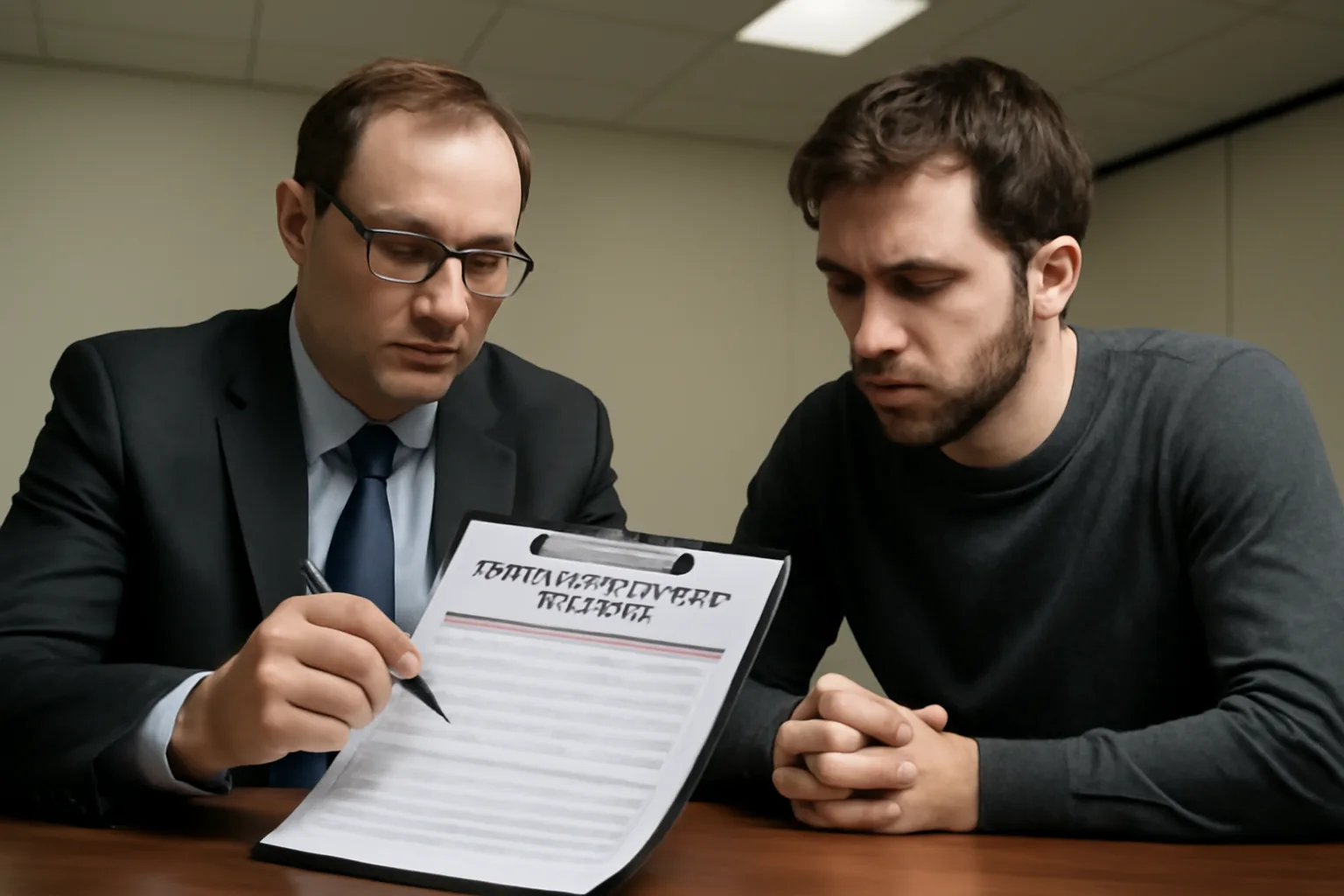
The Utah Labor Commission is the agency that oversees workers' compensation claims. When an IME obstruction dispute arises, the Commission's Division of Adjudication handles the request for suspension. Administrative law judges (ALJs) are neutral decision-makers who review evidence and hear arguments from both sides.
The Commission also provides an ombudsman program that offers free information to injured workers. If you are confused about the IME process or your rights, you can call the ombudsman for guidance. However, the ombudsman cannot represent you in a hearing.
For full representation, you still need a private attorney.
If the Commission issues a suspension order, it typically includes a specific date when benefits will stop and a condition for reinstatement (usually attending a rescheduled IME). The order may also set deadlines for compliance. Missing those deadlines can lead to further suspension or even dismissal in extreme cases.
Suspension vs. Dismissal: Key Differences
Many workers worry that missing an IME will end their claim permanently. In Utah, that's almost never the case for simple obstruction. Dismissal is reserved for extreme situations, like fraud or repeatedly refusing to participate in the claim process over a long period.
Let's compare:
| Aspect | Suspension | Dismissal |
|---|---|---|
| Effect on claim | Claim paused; can be revived | Claim terminated; must appeal or refile |
| Benefits during suspension | Stop (temporary) | Stop (permanent) |
| What ends it | Compliance (attend IME) | Court order, often after multiple violations |
| Retroactive pay | No pay for suspension period | Usually no pay at all |
| Example | Miss one IME without good reason | Miss three IMEs, ignore orders, and lie about injury |
So if you're dealing with a suspension, take a deep breath. It's not the end. But you need to fix it fast.
Dismissal can also occur if you abandon your claim by not responding to any communications for an extended period. That is different from a single missed IME. If you have multiple suspensions and never comply, the carrier may ask for dismissal because you have effectively refused to cooperate.
How IME Obstruction Impacts Your Permanent Impairment Rating
Your permanent impairment rating is a key number in your workers' comp case. It determines how much compensation you receive for lasting damage from your injury. The IME doctor often provides an opinion on your impairment rating, which the carrier uses to calculate your settlement.
If your claim is suspended due to IME obstruction, the doctor never gets to complete the exam. That means no impairment rating can be finalized, and your benefits remain suspended indefinitely. Once you attend the IME, the doctor can assess your condition and produce a rating, but the suspension period will still be unpaid.
Even after you comply, the IME report may contain an impairment rating that is lower than what your treating doctor predicted. That is a common outcome. You can challenge that rating by presenting your own medical evidence and requesting a hearing.
But the IME report becomes part of the official record, so it's important to attend and ensure the doctor has all your relevant medical history.
How to Handle an IME So Your Claim Doesn't Get Suspended
The best defense is a good offense. Here's how to protect your claim when an IME is scheduled:
- Always attend if you can. Even if you disagree with the carrier's right to an IME, it's safer to go and object later. A single attendance won't hurt your case, but missing can cause weeks of lost benefits.
- If you can't attend, call immediately. Explain why and ask to reschedule. Document the call – note the date, time, and who you spoke with. Follow up in writing (email or letter).
- Don't refuse to cooperate during the exam. Answer questions honestly, follow the doctor's instructions (as long as they're reasonable), and don't argue. If the doctor tries to go beyond the scope of your injury, politely say you'll discuss that with your attorney.
- Bring a friend or attorney if allowed. In Utah, you can bring a support person, but they cannot interfere. Let them observe and take notes. Check with the doctor beforehand – some IME doctors restrict observers.
- Record the exam (with permission). Utah is a one-party consent state for recordings, but it's best to ask. If you can't record, write down everything you remember immediately after.
- Don't sign anything without reading. The IME doctor may ask you to sign a release or a form. You have the right to refuse to sign anything other than an acknowledgment of attendance.
Before the exam, review your medical records so you can accurately describe your symptoms and limitations. Practice answering questions calmly and concisely. Avoid exaggerating or downplaying your pain—just describe what you experience in daily life.
Consistency is key; if you tell the doctor something different from what you told your treating doctor, the carrier will use that against you.
Strategies for Preparing Mentally and Logistically for an IME
Many injured workers feel anxious about IMEs because they sense the doctor is not on their side. That anxiety can lead to mistakes, such as being combative or withholding information. To avoid obstruction claims, prepare yourself mentally.
Arrive at least 15 minutes early. Bring a photo ID, your insurance card, and any relevant medical records the doctor requested. If you have a long list of medications, bring that too.
Dress comfortably but neatly, as a professional appearance can help create a neutral impression.
During the exam, listen carefully to each question and take your time answering. If you don't understand, ask for clarification. Do not volunteer extra information beyond what is asked.
For example, if the doctor asks how far you can walk, give a specific distance rather than launching into a story about your last trip to the grocery store.
After the exam, write down everything you remember as soon as possible. Include the doctor's questions, your answers, and any comments the doctor made. This record can be invaluable if you later need to challenge the report.
Also note the name of the doctor and any staff present.
What to Do If Your Claim Is Already Suspended
If you're reading this because your benefits just stopped, don't panic. Here's your action plan:
- Contact the adjuster immediately. Explain why you missed or didn't cooperate, and offer to reschedule. Do this in writing (email) so there's a record.
- Request a copy of the suspension order. If the Labor Commission issued one, review it for any deadlines or required actions.
- Attend the rescheduled IME. Go, cooperate, and get a copy of the doctor's report if possible.
- Notify the adjuster after the exam. Tell them you've complied and ask for reinstatement of benefits.
- If the carrier doesn't reinstate, file a motion with the Labor Commission. Ask a workers' comp attorney to help you quickly.
Time matters. The longer you wait, the more financial strain you'll face. Utah law doesn't require the carrier to pay you for the suspension period, even if your claim gets reinstated.
So every day counts.
If you cannot afford to go without benefits for weeks, consider applying for emergency assistance through the Utah Department of Workforce Services. Some carriers may also agree to continue medical benefits during the suspension if you request it in writing. But they are not required to do so.
How to Document Your IME Experience for Future Reference
Good documentation can make or break your ability to challenge a suspension or a negative IME report. As soon as you receive the IME notice, start a file. Save the written notice, any emails from the adjuster, and notes of any phone calls.
On the day of the exam, bring a notebook or use your phone to record your observations immediately afterward. Note the time you arrived, how long you waited, and the demeanor of the doctor. If the doctor seemed rushed or dismissive, write that down.
If they asked leading questions that assumed you were not injured, document those exact questions.
Keep a log of your symptoms and daily activities for the weeks surrounding the IME. This can show consistency in your complaints. If the IME doctor claims you can lift 50 pounds but your daily log shows you struggle to lift a gallon of milk, that contradiction may help your case.
Can You Get Back Pay After a Suspension?
Generally, no. Under Utah law, if your benefits are suspended due to IME obstruction, you don't get paid for the weeks you were out of compliance. That's the price you pay for missing the exam.
However, if the suspension was wrongful – for example, if the carrier failed to give proper notice or the IME doctor was biased – you might be able to recover those benefits through a hearing. But that's rare. The presumption is that the suspension was proper, and the burden is on you to prove otherwise.
That's why it's almost always better to attend the IME under protest than to skip it and fight later. You lose less money that way.
One exception: if you can show that the carrier acted in bad faith by scheduling an exam at an unreasonable time or place with the intent to cause you to miss it, a judge may order back pay. But you need strong evidence of bad faith, such as a pattern of scheduling conflicts or a doctor who repeatedly cancels.
How an IME Obstruction Affects Other Compensation Claims
If you're also pursuing a third-party claim – for example, if your work injury happened in a car crash on the job – you might be dealing with two different types of auto accident compensation or compensation for car crash claims. Workers' comp covers your medical bills and lost wages regardless of fault, but you may also have a separate personal injury lawsuit against the at-fault driver. In that case, the IME obstruction only affects your workers' comp claim, not the third-party case.
But be careful: if the IME doctor finds you're less injured than you claim, that report could be used in the third-party lawsuit to lower your motor vehicle accident compensation. So even if your comp claim is suspended, the IME report can hurt your other case.
Similarly, if you're seeking car injury compensation from your own auto insurance under medical payments or underinsured motorist coverage, an IME report (or a similar exam called an independent medical evaluation) could be used to dispute the severity of your injuries. The key is to treat every medical exam seriously, even if it's for a different claim.
If you have multiple claims, coordinate with your attorneys so you know what information may be shared. The IME doctor may ask about your other cases. You do not have to discuss them, but being evasive could be seen as uncooperative.
A simple statement like "I'm here for the workers' comp exam" is usually sufficient.
Why Utah Law Treats IME Obstruction as Suspension, Not Dismissal
The reason goes back to the purpose of workers' comp: it's a no-fault system that provides benefits quickly, without the need for lawsuits. The trade-off is that employees give up their right to sue their employer, and employers get a predictable cost. To keep the system balanced, both sides have duties.
You have a duty to cooperate with reasonable requests for medical exams. But you also have a right to benefits if you're injured.
Utah lawmakers decided that a permanent loss of benefits for a missed IME would be too harsh. After all, you might miss an appointment because of a legitimate emergency, or because you're in severe pain. The suspension approach gives you a chance to correct the problem, while still protecting the carrier's need to evaluate your condition.
It's a compromise that has worked for decades.
This approach also aligns with the principle that workers' comp is meant to be remedial, not punitive. The goal is to get injured workers back to health and employment, not to trap them in a system where one mistake costs them everything. If a suspension leads to dismissal, that only happens after repeated failures to comply, giving you many opportunities to fix the issue.
Common Myths About IME Obstruction in Utah
Let's clear up some misconceptions that cause workers to accidentally sabotage their claims:
- Myth: The IME is optional. No. Once the carrier sends proper notice, you must attend. Refusing is obstruction.
- Myth: If I miss the IME, my claim is dead forever. False. As explained, it's a suspension, not a dismissal. But the longer you wait, the harder it is to get benefits back.
- Myth: I can skip the IME if I'm still treating with my own doctor. No. The IME is separate from your treatment. You can (and should) continue treating with your own doctor, but you still have to attend the IME.
- Myth: I can cancel at the last minute for any reason. Only for a genuine emergency. Routine traffic or a scheduling conflict isn't enough – call in advance and ask to reschedule before the appointment.
- Myth: The IME doctor will help me. Actually, the IME doctor works for the insurance company. Their job is to provide an opinion that helps the carrier limit liability. Be polite, but be cautious.
Another common myth is that you can refuse the IME if you believe the doctor is biased. While you can object in writing before the exam, you cannot simply refuse to attend. If you have evidence of bias, bring it to the Labor Commission after the exam.
Attending under protest preserves your rights better than skipping.
What If You Miss an IME Due to a Medical Emergency?
Medical emergencies are a valid reason to miss an IME, but you must handle them correctly. If you are hospitalized or have a sudden severe condition, call the adjuster and the doctor's office as soon as you are able. Leave a message if no one answers.
Follow up with a written explanation and a doctor's note if possible.
The emergency must be genuine and documented. Saying "I had a headache" is not enough; but a migraine that sends you to the emergency room is. The carrier may still argue that you should have called earlier, so quick communication is critical.
If you wait several days to explain, the carrier may claim obstruction despite the emergency.
Once you recover, reschedule the IME promptly. If the carrier refuses to give you a new date, contact the Labor Commission. Do not assume the suspension will be lifted automatically – you must actively take steps to comply.
When to Hire a Workers' Comp Attorney
If you're facing an IME and your claim has a lot of money at stake — or if you've already been suspended — you should talk to a lawyer. An experienced Utah workers' comp attorney can:
- Advise you on how to behave at the IME.
- Object to an unreasonable IME request (e.g., too far away or unqualified doctor).
- Represent you at the suspension hearing.
- Negotiate with the carrier to reinstate benefits faster.
- Help you gather evidence to show the suspension was improper.
Most workers' comp attorneys offer free initial consultations and take cases on a contingency fee (a percentage of your eventual benefits). That means you don't pay unless you win. If you can't afford an attorney, the Utah Labor Commission also has a free ombudsman program that can assist with basic questions.
Even if you think you can handle the IME alone, having an attorney can reduce stress and prevent costly mistakes. An attorney can also file objections before the exam, which may stop an unreasonable IME from happening at all. In some cases, the carrier backs down when they see you have legal representation.
How to File a Complaint If the Carrier Is Abusing the IME Process
Sometimes carriers use IMEs as a tactic to delay or deny claims. If you believe the carrier is requesting exams too frequently, using biased doctors, or unreasonably scheduling exams that conflict with your work or medical treatment, you can file a complaint with the Utah Labor Commission's Adjudication Division. They have the power to limit the number of IMEs and to order the carrier to cooperate.
You can also report unethical behavior to the Utah Insurance Department.
But be careful: filing a complaint doesn't stop the immediate obligation to attend a properly scheduled IME. Keep attending until an ALJ tells you otherwise.
To file a complaint, you need to gather evidence showing the carrier's pattern of abuse. Examples include multiple IME requests for the same issue, scheduling exams on short notice despite your prior objections, or doctors who consistently produce reports favorable to the carrier without thorough examination. Submit your complaint in writing with copies of all relevant notices and correspondence.
Final Thoughts on IME Obstruction in Utah
Your workers' comp claim is a lifeline after a workplace injury. The IME shouldn't be a trap that costs you your benefits. Understand the rules, show up on time, cooperate respectfully, and if something goes wrong, fix it immediately.
Remember: in Utah, obstruction leads to suspension, not dismissal – but suspension can still wreak havoc on your finances. Don't let a missed appointment define your claim.
If you're also dealing with an injury from a car accident that wasn't work-related, those traffic accident compensation claims are handled differently. But your workers' comp and auto accident cases can intertwine, especially if the crash happened while you were working. An attorney who handles both types of claims can help you maximize your car accident and compensation across all avenues.
You can learn more about the overall process of filing a workers comp claim to ensure you don't miss steps that could put your benefits at risk. And if you're wondering about suing your employer, check out our guide on workers comp lawsuit options.
Key takeaways
- In Utah, obstructing an IME suspends your workers' comp benefits – it does not automatically terminate your claim. You can get benefits back by attending the rescheduled exam.
- Obstruction includes missing an appointment without good cause, refusing to cooperate during the exam, or interfering with the process. Emergency-related misses are not obstruction if you promptly reschedule.
- The suspension period is unpaid, so it's critical to attend the IME as scheduled or reschedule as soon as possible to minimize financial impact.
- Always attend an IME under protest if you disagree with it – skipping will only hurt you. Cooperate politely, document the exam, and seek legal advice if the carrier is abusing the process.
- An IME can also affect any related personal injury claim (like auto accident compensation), so treat every medical examination seriously regardless of which claim it's for.
Frequently asked questions
What happens if I miss an IME in Utah?
Can my workers' comp claim be dismissed for missing an IME?
What if I can't afford to miss work for an IME in Utah?
How long does a suspension last for IME obstruction in Utah?
Can I bring an attorney to an IME in Utah?
This article is for general informational purposes only and does not constitute legal advice. Always consult a qualified professional about your specific circumstances.

Written & reviewed by
Can OTUConsumer Legal Information Researcher & Editor
Can OTU researches and edits every guide on this site, drawing on primary legal sources, court records, and state statutes to produce accurate, plain-English explanations of U.S. compensation and personal injury claims.
View all guides →