Construction Site Brain Injury: Workers' Comp vs. Third-Party Lawsuit — What Are Your Options?

Please note: This article provides general information, not legal advice. Every case is different. Consult a qualified attorney to discuss your specific situation.
What Is Workers' Compensation for a Construction Site Brain Injury?
Workers' compensation is a no-fault insurance system that provides benefits to employees injured on the job. In exchange for these guaranteed benefits, you generally cannot sue your employer for negligence. For a construction site brain injury, workers' comp covers:
- Medical treatment (doctor visits, surgery, rehabilitation, medications)
- Temporary or permanent disability benefits (replacing a portion of lost wages)
- Vocational rehabilitation (retraining if you can't return to your old job)
- Death benefits to dependents if the injury is fatal
To receive these benefits, you don't need to prove anyone was at fault.
You just need to show that your injury arose out of and in the course of your employment. This makes the process faster and less adversarial. However, workers' comp does not compensate you for pain and suffering, emotional distress, or loss of enjoyment of life.
How Workers' Comp Benefits Are Calculated for Brain Injuries
Disability benefits are typically calculated as a percentage of your average weekly wage. For example, in many states, temporary total disability pays about two-thirds of your pre-injury wages, up to a state-set maximum. Permanent partial disability benefits depend on the severity of your impairment, often assessed using medical guidelines like the AMA Guides.
Medical benefits cover all reasonable and necessary treatment, including emergency care, hospital stays, and long-term rehabilitation. Vocational rehabilitation may include job retraining or education if your brain injury prevents you from returning to construction work.
Common Challenges in Workers' Comp Brain Injury Claims
Insurance companies may dispute the severity of your brain injury. They might argue that your symptoms are pre-existing or unrelated to the workplace accident. For instance, if you had a prior concussion, the insurer could claim your current issues stem from that earlier injury.
You may need to undergo an independent medical examination (IME) chosen by the insurer. Documenting all symptoms, from memory loss to mood swings, with a treating neurologist is critical to counter these challenges.
What Is a Third-Party Lawsuit?

A third-party lawsuit is a personal injury claim against someone other than your employer who caused or contributed to your brain injury. On a construction site, potential third parties include:
- Equipment manufacturers (defective machinery)
- Subcontractors or other contractors
- Property owners (if they failed to maintain a safe premises)
- Delivery drivers or other non-employees
In a third-party lawsuit, you can recover full compensation for all your damages, including medical expenses, lost income, pain and suffering, and loss of consortium. But you must prove that the third party was negligent — that they breached a duty of care that directly caused your injury. This requires evidence and often takes longer than a workers' comp claim.
Examples of Third-Party Liability on Construction Sites
Imagine a crane operator employed by a subcontractor drops a steel beam on your hard hat, causing a traumatic brain injury. Since the crane operator works for a different company, you can sue that subcontractor for negligence. Another example: a property owner fails to fix a known slippery surface, and you fall, hitting your head.
The owner's failure to maintain safe premises makes them a potential third-party defendant. Defective equipment, such as a scaffolding that collapses due to a manufacturing flaw, can also give rise to a product liability claim against the manufacturer.
Key Differences: Workers' Comp vs. Third-Party Lawsuit
| Factor | Workers' Compensation | Third-Party Lawsuit |
|---|---|---|
| Fault required? | No (no-fault) | Yes (must prove negligence) |
| Damages available | Medical, wage loss, disability, vocational rehab | Medical, lost wages, pain and suffering, emotional distress, loss of enjoyment |
| Punitive damages? | No | Possible in egregious cases |
| Time to resolution | Weeks to months | Months to years (often 1-3 years) |
| Attorney fees | Typically not needed; if used, capped by state law | Contingency fee (usually 33-40% of recovery) |
| Employer lawsuit bar? | Yes — cannot sue employer | No — can sue third parties |
Can You Pursue Both Workers' Comp and a Third-Party Lawsuit?
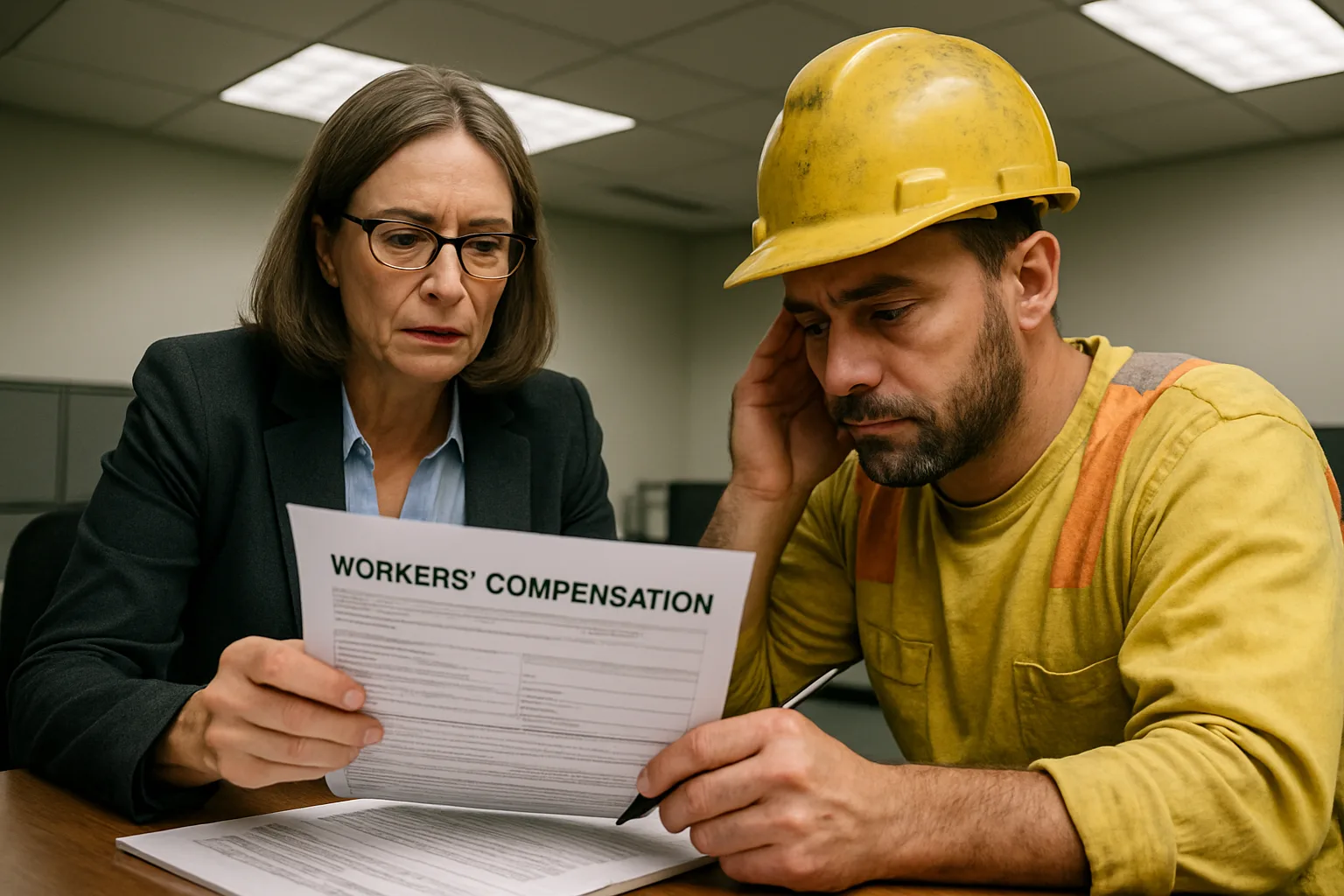
Yes, in most cases you can pursue both simultaneously. Workers' comp covers your immediate medical expenses and wage loss, while a third-party lawsuit can provide additional compensation for pain and suffering and other non-economic damages. However, there's a catch: if you win a third-party lawsuit, your workers' comp insurer may have a right to be reimbursed for the benefits they paid (this is called subrogation).
So you won't get double recovery for the same losses, but you can still come out ahead because the lawsuit covers items workers' comp doesn't.
For example, suppose your medical bills are $100,000 and you receive $50,000 in lost wage benefits from workers' comp. If you later settle a third-party lawsuit for $500,000, the workers' comp insurer may seek reimbursement of the $150,000 they paid. You'd net $350,000 — plus your pain and suffering compensation.
Without the lawsuit, you'd only have the $150,000 in workers' comp benefits.
Understanding Subrogation in Detail
Subrogation is a legal right that allows your workers' comp insurer to recover the benefits they paid from any third-party settlement or judgment. This prevents you from double-dipping on the same economic losses. However, after reimbursement, you keep the remainder, including all non-economic damages like pain and suffering.
In some states, the insurer's share is reduced by a percentage for attorney fees and costs. For example, if your lawyer takes 33% of the settlement, the insurer might only recover two-thirds of their lien. Always negotiate the subrogation amount with your attorney to maximize your net recovery.
Which Option Is Better for a Brain Injury?
There's no one-size-fits-all answer. It depends on the facts of your case. Here are some considerations:
- If your injury is clearly work-related and no third party is at fault: Workers' comp is your only option. File a workers compensation claim promptly.
- If a third party clearly caused your injury: A lawsuit may yield significantly more compensation, but you'll need to prove fault. Consider both avenues.
- If fault is unclear: Pursue workers' comp for immediate benefits while investigating third-party liability. Your attorney can help identify potential defendants.
Brain injuries often have lifelong consequences. The limited damages in workers' comp may not fully cover your future needs. A third-party lawsuit can provide the funds needed for long-term care, lost earning capacity, and pain and suffering.
Long-Term Costs of a Brain Injury
Severe traumatic brain injuries can require decades of medical care, including physical therapy, occupational therapy, speech therapy, and psychological counseling. Lost earning capacity may be total if you cannot return to any job. Workers' comp disability benefits are often capped in duration and amount, leaving gaps in coverage.
A third-party lawsuit can compensate for these future losses, ensuring you have resources for assisted living, home modifications, or specialized equipment. For example, a construction worker who suffers permanent cognitive impairment might need a lifetime caregiver, costing millions over time.
How to File a Workers' Comp Claim for a Brain Injury
If you decide to pursue workers' comp, act quickly. Steps include:
- Report the injury to your employer immediately (within 30 days in most states).
- Seek medical attention and tell the doctor the injury is work-related.
- File a formal claim with your state's workers' compensation board.
- Cooperate with the insurance adjuster and attend any required medical exams.
For detailed guidance, see our guide on filing a workers comp claim.
What to Do If Your Claim Is Denied
Workers' comp claims for brain injuries are sometimes denied due to lack of evidence or disputes over causation. If denied, you have the right to appeal through an administrative hearing. Gather all medical records, witness statements, and accident reports to support your case.
An experienced workers' comp attorney can help you navigate the appeals process and present evidence to a judge. Many states require mediation before a formal hearing, which can lead to a settlement without trial.
When to Consider a workers comp lawsuit Against a Third Party
If you suspect a third party is liable, consult a personal injury attorney. They can evaluate the evidence and advise whether a lawsuit is worthwhile. Common third-party scenarios on construction sites include:
- Defective equipment (e.g., a faulty ladder or scaffolding)
- Negligent subcontractor (e.g., a crane operator who dropped a load)
- Property owner who failed to provide a safe work environment
Remember, you cannot sue your employer (except in rare cases of intentional harm). But third-party claims are separate and can be filed even while you receive workers' comp.
Investigating Potential Third-Party Defendants
Your attorney will investigate all parties involved in the construction project. This includes reviewing contracts to determine which company was responsible for safety protocols. For example, if a general contractor hired a subcontractor who failed to secure scaffolding, the subcontractor may be liable.
Product liability claims require proving the equipment was defectively designed or manufactured. An investigation might involve interviewing witnesses, inspecting the accident scene, and consulting engineering experts. Time is critical because evidence can disappear or degrade.
Compensation Amounts: What Can You Expect?
Workers' comp benefits are typically limited by state formulas. For example, disability benefits might be two-thirds of your average weekly wage, up to a cap. Medical benefits are covered 100% if the treatment is authorized.
In contrast, third-party lawsuit settlements vary widely. A moderate brain injury case might settle for $100,000 to $500,000; severe cases can reach millions. These are illustrative ranges — actual results depend on the severity of injury, liability, and insurance limits.
Other types of car injury compensation or motor vehicle accident compensation follow similar principles but involve different defendants. If your brain injury resulted from a compensation car accident on the job, you might have both workers' comp and a claim against the at-fault driver. The same goes for auto accident compensation or traffic accident compensation — you can often pursue both workers' comp and a third-party claim.
For compensation for car crash injuries, the process is similar to other personal injury lawsuits.
Factors That Influence Settlement Amounts
Settlement amounts depend on the permanence of your brain injury, your age, your pre-injury earnings, and the strength of liability. Clear liability, such as a subcontractor's blatant safety violation, often leads to higher settlements. Insurance policy limits also cap what you can recover.
For example, if the third party has a $1 million policy, your settlement cannot exceed that amount. Your attorney will demand all applicable policies, including umbrella coverage, to maximize compensation. Medical evidence from neurologists and neuropsychologists is crucial to proving the extent of your damages.
Statute of Limitations
Workers' comp claims have short deadlines — often 30 days to report the injury and 1-2 years to file a claim. Third-party lawsuits have longer deadlines (typically 2-3 years from the date of injury), but they vary by state. Missing a deadline can bar your claim entirely, so act promptly.
Special Rules for Brain Injury Cases
Some states have special rules for brain injuries that affect cognitive function. For example, the statute of limitations may be tolled (paused) if you are mentally incapacitated due to the injury. This means you might have extra time to file a lawsuit if your brain injury impairs your ability to understand your legal rights.
However, you should never rely on this exception without consulting an attorney. It's safer to file as soon as possible to avoid any risk of losing your claim. Keep copies of all documents, including medical records and accident reports, to preserve evidence.
Should You Hire an Attorney?
For straightforward workers' comp claims, you may not need an attorney. But for brain injuries — especially if you're considering a third-party lawsuit — legal representation is strongly recommended. An attorney can:
- Investigate potential third-party defendants
- Calculate the full value of your damages
- Negotiate with insurance companies
- Handle subrogation issues
- Represent you in court if necessary
Most personal injury attorneys work on contingency, meaning you pay nothing unless you win.
How to Choose the Right Attorney
Look for an attorney with experience in both workers' comp and personal injury law, especially brain injury cases. Ask about their track record with construction site accidents. During a consultation, discuss their approach to subrogation and how they maximize net recovery.
Many firms offer free initial consultations, so you can compare options. Check online reviews and ask for references from past clients. A good attorney will communicate clearly and keep you informed throughout the process.
Medical Evidence and Documentation for Brain Injury Claims
Strong medical evidence is the backbone of any brain injury claim. You need documentation from neurologists, neuropsychologists, and other specialists. This includes MRI or CT scans showing structural damage, cognitive testing results, and records of ongoing symptoms like headaches, memory loss, or mood changes.
Keep a daily journal of your symptoms and how they affect your daily life. This can help demonstrate pain and suffering in a third-party lawsuit. For workers' comp, your treating doctor must link your condition directly to the workplace accident.
The Role of Neuropsychological Testing
Neuropsychological testing measures cognitive functions such as memory, attention, and problem-solving. These tests provide objective evidence of brain injury even when imaging scans appear normal. For example, a construction worker who struggles with multitasking after a fall may show deficits on testing.
The results can be used to calculate lost earning capacity and justify the need for ongoing therapy. Insurance companies often challenge these tests, so having a qualified neuropsychologist administer and interpret them is essential.
Impact of Brain Injury on Daily Life and Employment
A brain injury can change every aspect of your life. You may experience fatigue, irritability, and difficulty concentrating. Simple tasks like cooking or driving may become dangerous.
Employment in construction, which requires physical coordination and quick decision-making, may no longer be possible. Workers' comp vocational rehabilitation can help retrain you for a different career, but it may not fully replace your former income. A third-party lawsuit can compensate for this loss of enjoyment of life and reduced quality of life.
Long-Term Care Planning
Severe brain injuries may require assisted living facilities or in-home care for years. Workers' comp medical benefits cover only authorized treatment, which may not include long-term custodial care. A third-party settlement can fund a trust to pay for future care needs.
For example, you might use the funds to hire a live-in caregiver or modify your home with wheelchair ramps and safety features. Financial planning with a special needs attorney can ensure these funds are managed properly without affecting government benefits like Medicaid.
Understanding the Role of OSHA in Construction Site Safety
The Occupational Safety and Health Administration (OSHA) sets and enforces safety standards for construction sites. Violations of OSHA rules, such as failing to provide fall protection or proper hard hats, can be strong evidence of negligence in a third-party lawsuit. For example, if a subcontractor ignores OSHA's scaffolding requirements and you suffer a brain injury from a fall, that violation can help prove liability.
Your attorney can request OSHA inspection reports and citations to support your case. However, OSHA violations alone do not automatically entitle you to compensation; they must be linked to the cause of your injury.
How OSHA Reports Can Strengthen Your Claim
After a serious construction accident, OSHA often conducts an investigation and issues a report. This report may cite specific safety violations, such as inadequate training or missing guardrails. These findings are public records and can be used as evidence in a third-party lawsuit.
For instance, if OSHA fines a general contractor for failing to secure a crane, that citation can help prove negligence. Your attorney can obtain these reports through a Freedom of Information Act (FOIA) request. Keep in mind that OSHA reports are not admissible in all states, but they can still guide your legal strategy.
Dealing with Insurance Companies After a Brain Injury
Insurance adjusters may pressure you to accept a quick settlement or give a recorded statement. Do not agree to anything without consulting an attorney first. In workers' comp, the insurer may try to minimize your benefits by downplaying your symptoms.
In a third-party claim, the defendant's insurer will look for ways to deny liability or reduce your payout. For example, they might argue that you were not wearing your hard hat properly. Always let your lawyer handle all communications with insurance companies to protect your rights.
Common Tactics Used by Insurers
Insurers may use surveillance to show you performing activities that contradict your claimed limitations. They might also request that you see their own doctors, who may downplay your injury. Another tactic is to delay the claims process, hoping you will accept a low offer out of financial desperation.
For brain injury victims, cognitive impairments can make it harder to spot these tactics. An experienced attorney can anticipate these moves and counteract them with strong evidence and legal arguments.
Financial Planning After a Brain Injury Settlement
Receiving a large settlement from a third-party lawsuit requires careful financial planning. You may need to manage funds for decades of medical care and living expenses. Consider setting up a special needs trust to preserve eligibility for government benefits like Medicaid or Social Security Disability Insurance (SSDI).
A structured settlement, which pays out in installments over time, can provide steady income and prevent mismanagement. Consult a financial advisor who specializes in personal injury settlements to create a plan that meets your long-term needs.
Tax Implications of Your Compensation
Workers' comp benefits are generally tax-free at the federal level. Third-party lawsuit settlements for physical injuries, including brain injuries, are also typically tax-free under the Internal Revenue Code. However, any portion of the settlement allocated to lost wages or punitive damages may be taxable.
For example, if your settlement includes $100,000 for lost income, that amount could be subject to income tax. Your attorney and a tax professional can help structure the settlement to minimize tax liability. Always keep detailed records of how the settlement is allocated.
Key Takeaways
- Workers' comp provides no-fault benefits but limited damages; third-party lawsuits can include pain and suffering but require proving fault.
- You can pursue both simultaneously, but the workers' comp insurer may seek reimbursement from a third-party settlement.
- For brain injuries, a third-party lawsuit often yields higher compensation, but workers' comp provides immediate financial support.
- Act quickly: report the injury, preserve evidence, and consult an attorney to explore all options.
For more information, see the Occupational Safety and Health Administration (OSHA) for safety guidelines, or consult a local attorney.
Frequently asked questions
Can I sue my employer for a brain injury on a construction site?
What damages can I recover in a third-party lawsuit for a brain injury?
How long do I have to file a workers' comp claim for a brain injury?
Can I receive workers' comp and a third-party settlement at the same time?
What if a car accident caused my brain injury on a construction site?
This article is for general informational purposes only and does not constitute legal advice. Always consult a qualified professional about your specific circumstances.

Written & reviewed by
Can OTUConsumer Legal Information Researcher & Editor
Can OTU researches and edits every guide on this site, drawing on primary legal sources, court records, and state statutes to produce accurate, plain-English explanations of U.S. compensation and personal injury claims.
View all guides →