Walmart Personal Injury Settlement: How Much Can You Get?

Walmart faces thousands of personal injury claims every year. The company has a dedicated claims department that handles everything from slip-and-falls to auto accidents in their lots. While Walmart often settles cases to avoid bad publicity, they also fight hard when they believe they aren't at fault.
Your settlement will depend on the facts of your case, the strength of your evidence, and the skill of your attorney.
This information is general and not legal advice. You should consult a qualified attorney for advice specific to your situation.
What Is a Typical Walmart Personal Injury Settlement?
There's no fixed "going rate" for a Walmart injury case, but looking at thousands of settled claims gives us a useful range. Minor injuries with quick recoveries often settle for $5,000 to $15,000. Moderate injuries requiring ongoing treatment might bring $20,000 to $75,000.
Severe injuries causing permanent disability or death can reach $500,000 to $1 million or more.
These numbers are illustrative, not guarantees. Your actual settlement could be higher or lower depending on many factors we'll cover below.
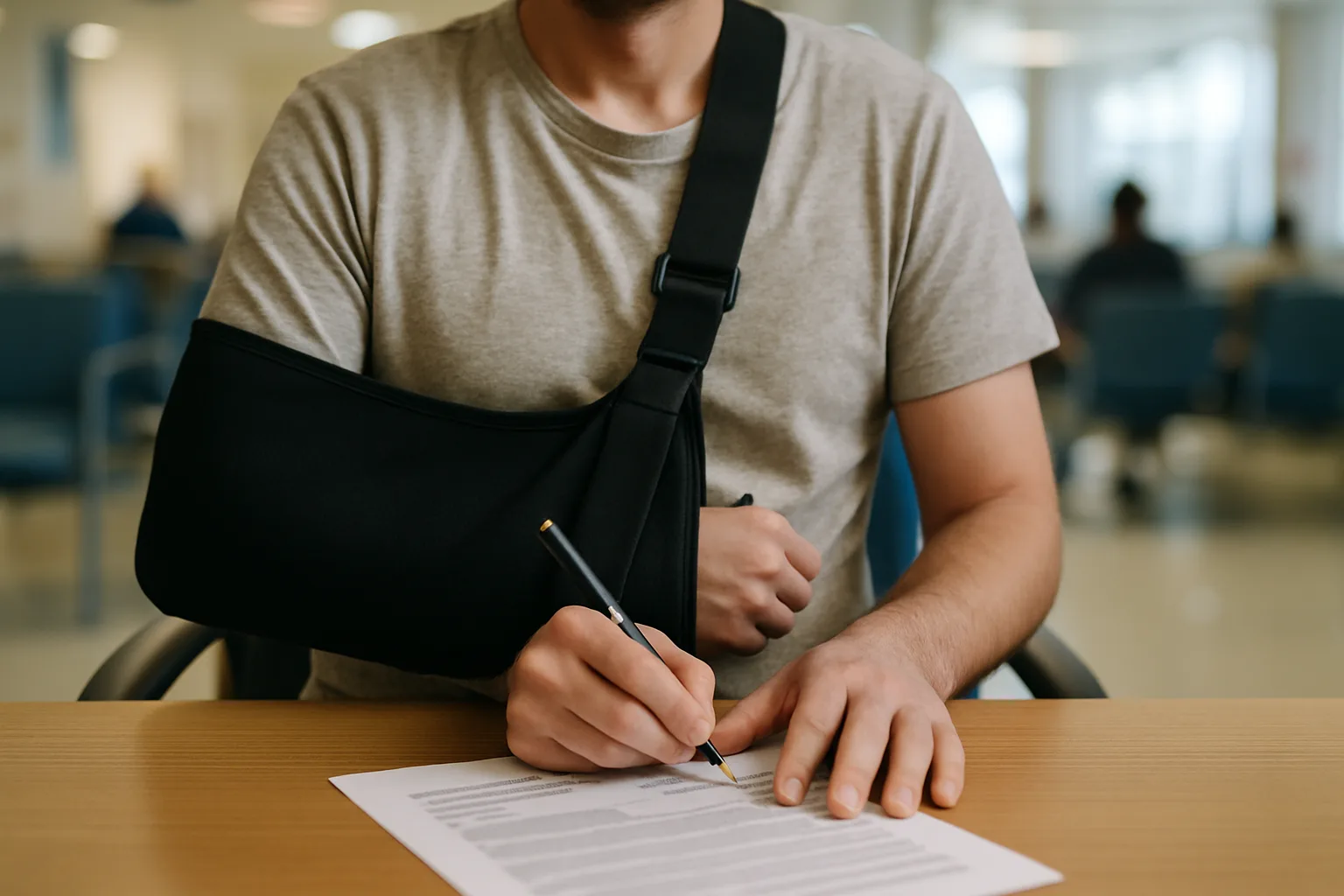
Walmart Settlement Amounts by Injury Type (Illustrative Table)
| Injury Scenario | Typical Settlement Range | Key Factors |
|---|---|---|
| Slip and fall (minor bruise/sprain) | $5,000 – $15,000 | Quick recovery, low medical bills |
| Slip and fall (fracture or surgery) | $20,000 – $75,000 | Moderate medical costs, time off work |
| Parking lot auto accident (whiplash) | $10,000 – $30,000 | Soft tissue injury, short treatment |
| Parking lot auto accident (herniated disc) | $30,000 – $100,000 | Ongoing pain, possible surgery |
| Product injury (defective merchandise) | $15,000 – $50,000 | Liability on manufacturer or Walmart |
| Catastrophic injury (paralysis, brain damage) | $500,000 – $1,000,000+ | Lifetime care, lost earning capacity |
| Wrongful death | $500,000 – $2,000,000+ | Loss of income, pain and suffering |
What Factors Determine Your Settlement Amount?
Severity of Your Injuries
This is the single biggest factor. The more serious your injury, the higher your medical bills, lost wages, and pain and suffering. Walmart's adjusters use a formula that multiplies your economic damages (medical bills + lost income) by a number between 1.5 and 5, depending on injury severity.
A minor sprain might get a 1.5 multiplier; a permanent disability might get a 5.
Consider two examples. A customer who slips on a wet floor and suffers a mild ankle sprain with $2,000 in medical bills might see a settlement of $3,000 to $10,000. In contrast, a customer who falls from a broken display shelf and fractures their hip, requiring surgery and months of rehab with $50,000 in bills, could see a settlement of $75,000 to $250,000.
The multiplier reflects both the intensity of pain and the long-term impact on daily life.
Liability: How Clearly Walmart Was at Fault
Walmart only pays if they were negligent. For a slip and fall, that means proving Walmart knew about the hazard (or should have known) and failed to fix it. If you were partly at fault — say you were texting while walking — your settlement may be reduced under comparative negligence rules.
In states like Alabama, if you're even 1% at fault, you may recover nothing. In most states, your percentage of fault reduces your award proportionally.
For example, if a jury finds Walmart 80% at fault for a spill and you 20% at fault for not looking, a $100,000 award would be reduced to $80,000. But in a pure comparative negligence state like California, you could still recover even if you were 99% at fault, though the amount would be very small. Understanding your state's rules is critical for evaluating your case.
Medical Treatment and Documentation
You must seek medical care immediately after the injury and follow your doctor's orders. Gaps in treatment or delays in seeing a doctor will be used against you. Walmart's adjusters will scrutinize your medical records.
Consistent treatment and clear documentation of your pain and limitations are essential for a strong claim.
Imagine you slip at Walmart but wait three days to see a doctor. The adjuster will argue your injury was minor or unrelated to the fall. Conversely, if you visit the ER the same day, follow up with a specialist, and attend physical therapy regularly, your claim is far stronger.
Keep a journal detailing your pain levels, missed work, and daily struggles to supplement medical records.
Lost Wages and Future Earning Capacity
If your injury caused you to miss work, you can claim lost wages. If the injury prevents you from returning to your previous job or reduces your earning ability, you can claim loss of future earning capacity. This requires expert testimony from a vocational expert or economist in serious cases.
For instance, a warehouse worker who suffers a back injury and can no longer lift heavy objects may need to switch to a lower-paying desk job. An economist can calculate the difference in lifetime earnings, which could add hundreds of thousands of dollars to the settlement. Even a few weeks of missed work at minimum wage can add up quickly, so document every hour missed.
Pain and Suffering
Non-economic damages like physical pain, emotional distress, and loss of enjoyment of life can make up a large portion of your settlement. There's no receipt for pain, so attorneys use methods like the multiplier (above) or a per-diem rate (a daily amount for each day you suffer).
For a moderate injury with $20,000 in medical bills and a multiplier of 3, pain and suffering would be $60,000, bringing the total to $80,000. A per-diem approach might assign $100 per day for 200 days of significant pain, yielding $20,000. The method used depends on state law and attorney strategy.
Severe injuries like chronic pain or PTSD often justify higher multipliers.
Punitive Damages
In rare cases where Walmart's conduct was reckless or intentional — like ignoring repeated complaints about a dangerous condition — a court may award punitive damages to punish the company. These can multiply your settlement significantly, but they are hard to get and often capped by state law.
For example, if Walmart knew about a broken escalator for months and failed to repair it, causing a serious injury, a jury might award punitive damages. However, many states cap punitive damages at three times compensatory damages or $500,000. Your attorney will assess whether Walmart's conduct rises to this level.
How Does the Walmart Claims Process Work?
Step 1: Report the Incident Immediately
Tell a Walmart manager right away and ask them to fill out an incident report. Get a copy if possible. Take photos of the hazard, your injuries, and the surrounding area.
Get contact information from any witnesses. Do not give a recorded statement to Walmart's insurance adjuster without your attorney present.
Reporting quickly creates a paper trail and prevents Walmart from claiming the incident didn't happen. If you wait days, the spill or hazard may be cleaned up, and surveillance footage may be erased. Witnesses may forget details, so gather their names and phone numbers on the spot.
Step 2: Seek Medical Attention
Go to a doctor or emergency room as soon as possible — even if you feel fine. Some injuries, like herniated discs or concussions, may not show symptoms for days. Delaying treatment gives Walmart an argument that your injury wasn't serious or wasn't caused by the accident.
For instance, a customer who slips and feels fine but develops back pain a week later will face skepticism. The adjuster will argue the pain could be from another cause. Immediate medical evaluation links the injury to the incident and establishes a baseline for your condition.
Step 3: Hire an Attorney
Walmart has a team of lawyers and adjusters working to minimize your payout. You need someone on your side. Most personal injury attorneys work on contingency — they only get paid if you win.
An experienced attorney knows how to value your case, negotiate with Walmart, and take them to court if necessary.
Without an attorney, you may accept a lowball offer worth a fraction of your claim's true value. An attorney can also handle complex issues like liens, insurance coverage, and evidence preservation. Many offer free consultations, so you have nothing to lose by seeking advice.
Step 4: Demand Letter and Negotiation
Your attorney will send a demand letter to Walmart's claims department outlining your injuries, medical bills, lost wages, and pain and suffering. Walmart will respond with a low initial offer. Negotiation follows, often taking weeks or months.
If a fair settlement can't be reached, your attorney may file a personal injury lawsuit.
The demand letter is a critical document that sets the stage for negotiation. It includes a detailed narrative of the incident, evidence of liability, and a calculation of damages. Walmart's adjusters will review it and may counter with a fraction of the demand.
Skilled negotiation can bridge the gap, but patience is key.
Step 5: Settlement or Trial
Most cases settle before trial. But if Walmart refuses to offer a fair amount, your case may go to court. Trials are risky and time-consuming — they can take a year or more.
Your attorney will advise you on whether to accept a settlement or proceed to trial.
Settlement offers often come after discovery, when both sides have exchanged evidence. If Walmart sees strong evidence of negligence and serious damages, they are more likely to offer a fair amount. A trial may result in a higher award, but also carries the risk of a defense verdict or lower jury award.
How Long Does a Walmart Personal Injury Case Take?
The timeline depends on the complexity of your case and whether it settles or goes to trial. Simple cases with clear liability and minor injuries may settle in 3–6 months. Cases involving serious injuries or disputed liability can take 12–24 months.
If a lawsuit is filed, it may take 18–36 months to reach trial. For a detailed breakdown, see our guide on how long does a personal injury lawsuit take.
Delays can occur if Walmart disputes liability, if medical treatment is ongoing, or if the court calendar is crowded. Your attorney can give you a more accurate timeline based on your specific circumstances. Patience is important, as rushing to settle may result in a lower payout.
What Is the Personal Injury Statute of Limitations for Walmart Claims?
Every state has a deadline for filing a personal injury claim against Walmart. This is called the personal injury statute of limitations. In most states, you have 1 to 3 years from the date of the injury.
If you miss this deadline, you lose your right to sue forever. Some states have shorter deadlines for claims against government entities (if the accident happened on government property leased by Walmart) or for wrongful death. Check your state's personal injury claim time limit with an attorney immediately.
For a state-by-state guide, see our page on personal injury statute of limitations.
For example, in California, you have two years from the date of injury. In Kentucky, you have only one year. If you were injured in a Walmart parking lot in New York, you have three years.
Missing the deadline by even a single day can bar your claim entirely, so act promptly.
Can You Get Workers' Compensation and a Personal Injury Settlement?
If you were injured while working at Walmart, you generally cannot sue Walmart for personal injury — your remedy is workers' compensation. However, if a third party (like a product manufacturer or another driver) caused your injury, you may have both a workers' comp claim and a personal injury lawsuit against that third party. This is called a workers compensation and personal injury settlement situation.
Your workers' comp insurer may have a lien on your settlement, meaning they get reimbursed for benefits they paid. An attorney experienced in both areas can help you navigate this.
For instance, if a Walmart employee is injured by a defective forklift, they can file a workers' comp claim against Walmart and a product liability lawsuit against the forklift manufacturer. The workers' comp insurer may seek reimbursement from the lawsuit proceeds. An attorney can negotiate the lien to maximize your recovery.
Common Types of Walmart Injury Cases
Slip and Fall Accidents
These are the most common. You slip on a wet floor, spilled liquid, or debris. Walmart must prove they had a reasonable cleaning and inspection schedule.
Your attorney will look for surveillance video and incident reports to show Walmart knew or should have known about the hazard.
A typical example: a customer slips on a puddle of water near the produce section. If Walmart's cleaning logs show no inspection for two hours, that may prove negligence. Conversely, if the spill happened moments before the fall, Walmart may argue they had no reasonable opportunity to clean it.
Parking Lot Accidents
Auto accidents in Walmart parking lots are frequent. Liability can be complex — it may fall on the other driver, Walmart (if poor lighting or signage contributed), or both. If you're injured in a parking lot crash, your claim may involve auto injury settlements from the other driver's insurance and a premises liability claim against Walmart.
For example, if a driver hits a pedestrian in a poorly lit crosswalk, Walmart may be partially liable for inadequate lighting. If the other driver was speeding, their insurance would also be responsible. An attorney can coordinate multiple claims to ensure full compensation.
Falling Merchandise
Items stacked too high or improperly secured can fall on customers. Walmart is responsible for safe stacking. If you're hit by a falling box or pallet, you may have a strong claim.
Consider a customer browsing the cereal aisle when a heavy box falls from a top shelf, striking their shoulder. If the box was stacked unevenly or beyond the recommended height, Walmart is likely negligent. Surveillance video showing the stacking process can be crucial evidence.
Defective Products
If a product you bought at Walmart malfunctions and injures you, you may have a product liability claim against the manufacturer, and possibly against Walmart if they knew of the defect and sold it anyway.
For instance, a customer buys a folding chair that collapses, causing a fall and broken wrist. The manufacturer is primarily liable, but Walmart may share liability if they ignored safety complaints. Product liability cases often involve expert testimony on design or manufacturing defects.
How to Maximize Your Walmart Personal Injury Settlement
- Don't talk to Walmart's insurance adjuster alone. They will try to get you to say something that hurts your case. Refer all calls to your attorney.
- Don't sign anything from Walmart or their insurer without your lawyer reviewing it. They may try to get you to sign a release for a small amount.
- Document everything: Keep a pain journal, save all medical bills and receipts, and take photos of your injuries over time.
- Follow all medical advice — if you miss appointments or stop treatment, Walmart will argue you're not really injured.
- Don't post on social media about your injury or your daily activities. Insurance adjusters monitor social media for evidence that contradicts your claims.
These steps are simple but powerful. For example, a pain journal documenting daily struggles with sleep, work, and family activities can significantly boost pain and suffering damages. Social media posts showing you at a party or exercising can be used to argue your injuries are minor, so avoid posting altogether.
When Should You Hire a Lawyer?
You should consult a personal injury attorney as soon as possible after your injury. Many offer free consultations. If your injuries are minor and medical bills are under a few thousand dollars, you might handle it yourself.
But if you have significant medical bills, lost wages, or long-term pain, an attorney can make a huge difference. Studies show that represented clients receive settlements 3–4 times higher than those who go it alone.
Even if you're unsure about the severity of your injury, a consultation can help you understand your rights and options. Attorneys can also identify potential claims you might not have considered, such as product liability or third-party claims.
What If Walmart Denies Liability?
Walmart may argue that they weren't negligent, or that you were more at fault than they were. For example, they might claim you should have seen the spill and avoided it. Your attorney will gather evidence — surveillance video, witness statements, maintenance records — to counter these arguments.
If Walmart refuses to settle fairly, your attorney may file a personal injury lawsuit to take the case to court.
In some cases, Walmart may argue the hazard was "open and obvious," such as a large puddle in plain sight. Your attorney can counter that even obvious hazards require reasonable steps to address, especially in high-traffic areas. A lawsuit forces Walmart to defend their actions in court, which often motivates them to settle.
Can You Sue Walmart for More Than the Settlement Offer?
Yes. If you reject Walmart's settlement offer, you can file a lawsuit and ask a jury for more money. However, there's no guarantee a jury will award more — they could award less or nothing.
That's why most cases settle. Your attorney will advise you on whether the offer is fair based on the strength of your case and the likely jury verdict range.
For example, if Walmart offers $30,000 but your attorney believes a jury would award $50,000 to $80,000, rejecting the offer may be wise. But if the offer is close to the expected range, accepting it avoids the risk and delay of trial. Your attorney's experience with local juries is invaluable in making this decision.
How Much Does a Lawyer Cost for a Walmart Injury Case?
Most personal injury lawyers work on a contingency fee basis. They take a percentage of your settlement — typically 33% to 40%. If you don't win, you pay nothing.
Some lawyers also charge for case expenses (like filing fees, expert witnesses, and medical records) which are deducted from your settlement. Make sure you understand the fee agreement before signing.
For a $50,000 settlement, a 33% contingency fee would be $16,500, leaving you with $33,500. Expenses might add another $2,000, so your net recovery would be $31,500. Always ask about expenses upfront and get the fee agreement in writing.
What About Medical Bills and Liens?
If you have health insurance, your insurer may have a lien on your settlement — meaning they get paid back for the medical bills they covered. Medicare and Medicaid also have liens. Your attorney will negotiate these liens down so you keep more of your settlement.
In some cases, you can also negotiate with hospitals and doctors to accept less than the full bill.
For instance, if your health insurer paid $20,000 in medical bills, they may agree to accept $12,000 from your settlement, leaving you with more money. Your attorney handles these negotiations, which can be complex. Without an attorney, you might overpay liens and reduce your net recovery.
Can You Get Compensation for Emotional Distress?
Yes. Emotional distress is part of pain and suffering. You can be compensated for anxiety, depression, loss of sleep, and other emotional effects of your injury.
You'll need documentation from a therapist or doctor to support this claim.
For example, a customer who develops PTSD after a traumatic fall in a Walmart aisle may receive additional compensation for therapy costs and reduced quality of life. A diagnosis from a mental health professional strengthens this claim. Emotional distress damages can be significant in severe cases.
What If the Accident Happened in a Walmart Parking Lot?
Walmart is responsible for maintaining safe parking lots. If you were hit by a shopping cart, tripped on a pothole, or injured in a car accident due to poor lighting or signage, you may have a claim. The same rules apply: you must prove Walmart was negligent.
If another driver caused the crash, you can also pursue a claim against that driver's insurance for auto injury settlements.
For instance, if you trip on a large pothole in the parking lot and break your ankle, Walmart may be liable if they failed to repair it or warn customers. Photos of the pothole and records of prior complaints can prove negligence. If a driver hits you, their insurance may cover medical bills and lost wages, while Walmart's liability covers premises defects.
How Do You Prove Walmart's Negligence?
You need to show that Walmart owed you a duty of care (they did — as a business invitee), they breached that duty (e.g., failed to clean up a spill in a reasonable time), and that breach caused your injury. Evidence includes surveillance video, incident reports, witness statements, maintenance logs, and photos. Your attorney will also look for prior similar incidents at the same store, which can show Walmart knew about a dangerous condition.
For example, if three customers slipped on the same wet floor in the past month, that pattern proves Walmart had notice of the hazard. Your attorney can subpoena Walmart's incident records to uncover this evidence. Without such proof, Walmart may argue the hazard was temporary and unavoidable.
What Is the Average Settlement for a Walmart Slip and Fall?
There's no official average, but based on reported cases and attorney experience, slip-and-fall settlements at Walmart typically fall between $10,000 and $50,000. Cases with fractures or surgery often settle for $30,000 to $75,000. Catastrophic injuries can reach $500,000 or more.
Remember, these are ranges, not guarantees.
For instance, a simple slip with a bruised knee and no time off work might settle for $8,000. A fall causing a broken hip requiring surgery and months of rehab could settle for $60,000. Each case is unique, so consult an attorney for a personalized evaluation.
How to Choose the Right Attorney for Your Walmart Injury Case
Not all personal injury attorneys are equally experienced with Walmart claims. Look for an attorney who has handled premises liability cases against large retailers. Ask about their track record with Walmart specifically, including settlements and trial results.
Schedule consultations with at least two or three attorneys before deciding. Ask about their fee structure, communication style, and how they plan to handle your case. An attorney who is responsive and transparent is more likely to fight for your best interests.
What to Do If Walmart's Insurance Adjuster Calls You
If Walmart's adjuster calls, be polite but firm. Say you are not comfortable discussing the case without your attorney present. Do not provide any details about your injuries, medical treatment, or how the accident happened.
The adjuster may try to get you to admit fault or downplay your injuries. For example, they might ask, "You didn't see the spill because you were looking at your phone, right?" Any admission can be used against you. Simply say, "I'll have my attorney contact you," and hang up.
Can You Settle a Walmart Injury Case Without a Lawyer?
Technically yes, but it's risky. Walmart's adjusters are trained to minimize payouts. Without legal knowledge, you may accept an offer far below your case's true value.
For minor injuries with clear liability and low medical bills, you might handle it yourself.
However, if you have any ongoing pain, missed work, or disputed liability, an attorney is essential. Even a small mistake, like signing a release too early, can bar you from future claims. Most attorneys offer free consultations, so it's worth getting professional advice.
Key Takeaways
- Walmart personal injury settlements vary widely based on injury severity, liability, and evidence.
- Most cases settle for $10,000 to $75,000, but serious injuries can yield much more.
- You have a limited time to file — check your state's personal injury statute of limitations.
- Hiring an experienced attorney significantly increases your chances of a fair settlement.
- Document everything, follow medical advice, and don't talk to Walmart's adjusters alone.
If you've been injured at Walmart, take action quickly. The sooner you consult an attorney, the stronger your case will be. For more details on the claims process, read our complete guide to personal injury claim procedures.
Frequently asked questions
How long does a Walmart personal injury settlement take?
What is the average Walmart slip and fall settlement?
Do I need a lawyer for a Walmart injury claim?
Can I sue Walmart if I was partly at fault?
What is the statute of limitations for a Walmart injury claim?
This article is for general informational purposes only and does not constitute legal advice. Always consult a qualified professional about your specific circumstances.

Written & reviewed by
Can OTUConsumer Legal Information Researcher & Editor
Can OTU researches and edits every guide on this site, drawing on primary legal sources, court records, and state statutes to produce accurate, plain-English explanations of U.S. compensation and personal injury claims.
View all guides →