Social Media Addiction Lawsuits: Can You File a Personal Injury Claim?
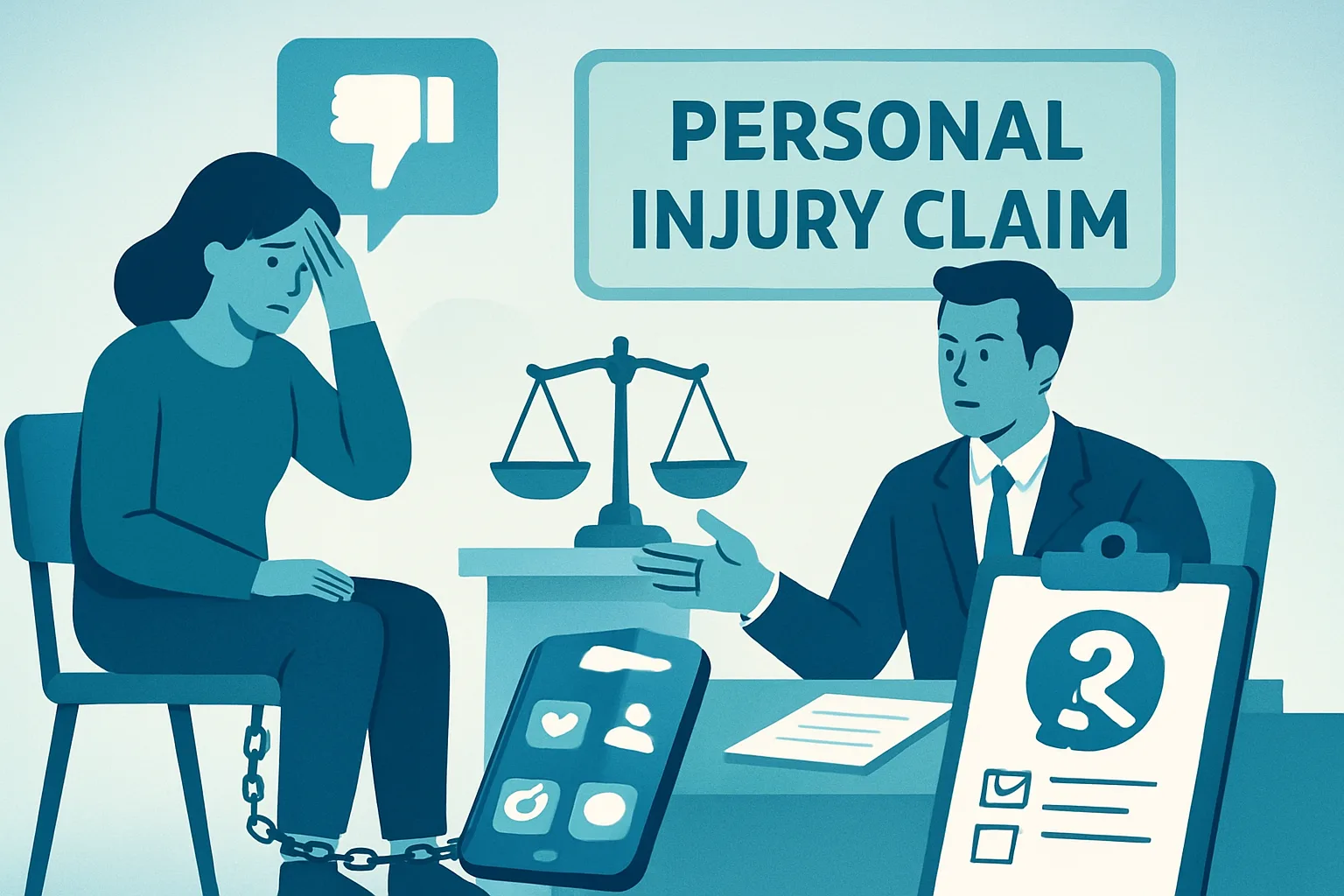
- Lawsuits claim platforms like Meta and TikTok intentionally design addictive features that harm mental health.
- Plaintiffs must prove the addiction caused specific, quantifiable damages, such as medical expenses or lost income.
- Statutes of limitations vary by state, so acting quickly is essential to preserve your claim.
Social media has become an integral part of modern life, but for millions of users, platforms like Instagram, TikTok, and Facebook have led to problematic use that resembles addiction. In recent years, a wave of social media addiction lawsuits has emerged, with plaintiffs arguing that tech companies knowingly designed their products to be addictive, causing serious mental health consequences.
If you or a loved one has suffered from social media addiction, you may wonder whether you can take legal action. This article explains the legal landscape, what you need to prove, and the challenges you may face in pursuing a personal injury claim.
Please note: This article provides general information and is not legal advice. Every case is unique, and you should consult with a qualified personal injury attorney to evaluate your options.
What Is a Social Media Addiction Lawsuit?
A social media addiction lawsuit is a type of personal injury lawsuit where plaintiffs allege that social media companies designed their platforms to be addictive, leading to mental health issues such as anxiety, depression, and even suicide. These lawsuits typically claim that the companies knew about the harmful effects but failed to warn users or make design changes.
Examples of lawsuits include cases brought by school districts against Meta (Facebook/Instagram) and TikTok, as well as individual claims from teens and parents. The core argument is that the platforms use algorithms, notifications, and other features to maximize user engagement at the expense of well-being.
For instance, a 2023 lawsuit filed by a California school district alleged that TikTok's algorithm promoted harmful content to teenagers. The district claimed that teachers spent excessive time dealing with student mental health crises linked to the platform.
Can You Sue Social Media Companies for Addiction?
Yes, you can sue, but success is not guaranteed. Courts are still grappling with how to apply traditional personal injury law to digital platforms. The biggest obstacle is Section 230 of the Communications Decency Act, which generally shields tech companies from liability for content posted by users.
However, plaintiffs argue that addiction claims target the design of the platform, not user-generated content, so Section 230 should not apply.
Another challenge is proving that the platform caused your addiction and resulting harm. You must show that the company's actions were a substantial factor in your condition, which often requires expert testimony and extensive discovery.
For example, a plaintiff might need to present data from their phone showing hours of daily use. An expert could then link that usage pattern to documented psychological harm.
What Are the Legal Grounds for a Social Media Addiction Lawsuit?
Most social media addiction lawsuits are based on theories of negligence, product liability, and failure to warn. To succeed, you generally need to establish:
- Duty of care: The platform owed you a duty to design its product safely.
- Breach: The company breached that duty by creating addictive features.
- Causation: The breach directly caused your addiction and harm.
- Damages: You suffered quantifiable losses, such as medical bills, therapy costs, or lost wages.
Some cases also allege fraudulent concealment, arguing that companies hid research about the dangers of their platforms.
For instance, internal Meta documents leaked by whistleblower Frances Haugen showed that the company knew Instagram harmed teen mental health. Plaintiffs use such evidence to support claims of fraudulent concealment.
What Damages Can You Recover in a Social Media Addiction Lawsuit?
If you succeed in a social media addiction lawsuit, you may be entitled to compensatory damages, which include:
- Medical expenses: Costs for therapy, counseling, or hospitalization related to addiction.
- Lost income: Wages lost due to inability to work or reduced productivity.
- Pain and suffering: Compensation for emotional distress and diminished quality of life.
- Punitive damages: In cases of egregious conduct, courts may award additional damages to punish the company.
However, personal injury lawsuit settlements for social media addiction are still rare, and early cases have often been dismissed. It is important to have realistic expectations and work with an experienced attorney.
For example, a plaintiff who lost their job due to compulsive social media use might claim lost wages. They would need to show that the addiction directly led to their termination.
What Is the Statute of Limitations for a Social Media Addiction Lawsuit?
The personal injury statute of limitations for a social media addiction lawsuit varies by state, typically ranging from one to six years. For example, in California, you generally have two years from the date of injury to file a claim. In New York, the deadline is three years.
Because addiction develops over time, determining when the statute begins can be complex. Some courts may use the "discovery rule," which starts the clock when you knew or should have known that your addiction was caused by the platform.
It is crucial to consult a personal injury solicitors near me to understand the specific deadlines in your state. Missing the deadline can bar you from recovery entirely.
Consider a scenario where a user develops anxiety after years of Instagram use. The statute might start when a therapist first links the anxiety to social media. This makes early legal consultation essential.
How Long Does a Social Media Addiction Lawsuit Take?
The timeline for a social media addiction lawsuit varies widely. Some cases may settle in months, while others can take years, especially if they involve novel legal issues. A key factor is whether the court grants motions to dismiss based on Section 230.
If the case survives, discovery and expert testimony can extend the process. For a general idea, see how long does a personal injury lawsuit take.
Most cases are still in early stages, so there is no established timeline. Patience and a strong legal team are essential.
For instance, a 2022 lawsuit against TikTok in Pennsylvania took over 18 months just to survive a motion to dismiss. The case is now in discovery, which could take another year.
What Are the Challenges in Proving a Social Media Addiction Lawsuit?
Proving a social media addiction lawsuit is difficult for several reasons:
- Causation: You must show that the platform's design, not other factors (e.g., genetics, environment), caused your addiction.
- Section 230: Courts have interpreted this law broadly, often dismissing claims that target content moderation.
- First Amendment: Platforms may argue that their algorithms are protected speech.
- Individual responsibility: Defendants may argue that users chose to use the platform.
Despite these hurdles, some cases have moved forward, particularly those brought by states and school districts. Individual claims may be stronger when the plaintiff is a minor, as children are considered more vulnerable.
For example, a court in California allowed a teen's lawsuit against Meta to proceed in 2023. The judge ruled that design defect claims are not barred by Section 230.
Should You Hire a Personal Injury Attorney for a Social Media Addiction Lawsuit?
Given the complexity of these cases, hiring a personal lawsuit attorney with experience in product liability or mass torts is highly recommended. An attorney can help you gather evidence, calculate damages, and navigate legal defenses. Many lawyers offer free consultations, so you can discuss your case without upfront cost.
When searching for a lawyer, look for those who have handled cases against tech companies or have a background in addiction litigation. You can start by searching for personal injury solicitors near me and asking about their experience with social media cases.
For instance, an attorney might have previously worked on opioid litigation. That experience with mass torts can be valuable for social media addiction cases.
What Is the Current Status of Social Media Addiction Lawsuits?
As of 2025, social media addiction lawsuits are still emerging. In 2023, a federal judge in California allowed many claims against Meta, YouTube, and TikTok to proceed, rejecting Section 230 defenses for design defect claims. However, other courts have dismissed cases.
The legal landscape is evolving rapidly, and new decisions could shape the future of these claims.
Multidistrict litigation (MDL) has been established for some cases, which may streamline discovery and lead to settlement discussions. However, no major personal injury lawsuit settlements have been publicly disclosed yet.
For example, the Social Media Adolescent Addiction MDL in California now includes over 500 cases. Bellwether trials are expected to begin in 2026.
What Should You Do If You Think You Have a Social Media Addiction Lawsuit?
If you believe you have a claim, take these steps:
- Document your use: Keep records of how much time you spent on platforms and how it affected your life.
- Seek medical help: Get a professional diagnosis and treatment for addiction or related mental health conditions.
- Preserve evidence: Save screenshots, messages, and any communications with the platform.
- Consult an attorney: Contact a lawyer who handles personal injury claim cases to evaluate your options.
Remember that personal injury statute of limitations deadlines apply, so do not delay.
For example, a parent might start a journal documenting their teen's declining grades and increased screen time. This record can be powerful evidence in court.
How Social Media Platforms Are Designed to Be Addictive
Social media companies use sophisticated techniques to keep users engaged for long periods. Features like infinite scroll, push notifications, and personalized algorithms are designed to trigger dopamine releases in the brain. For example, Instagram's algorithm shows content based on past behavior, encouraging repeated checking.
These design choices are not accidental. Internal documents from Meta, leaked by whistleblowers, show that the company knew about the addictive potential of its platforms. Plaintiffs in lawsuits often cite these documents as evidence of intentional harm.
For instance, a 2021 leak revealed that Meta's own research found Instagram made body image issues worse for 1 in 3 teen girls. This research was not publicly disclosed.
Specific Features That Contribute to Addiction
Several platform features are commonly cited in social media addiction lawsuits:
- Variable rewards: Likes, comments, and shares appear unpredictably, similar to slot machines.
- Social comparison: Curated profiles can lead to feelings of inadequacy and compulsive checking.
- Fear of missing out (FOMO): Notifications create urgency to stay connected.
- Autoplay and infinite scroll: These remove natural stopping points, extending usage.
For instance, TikTok's "For You" page uses machine learning to serve content that maximizes watch time. This can lead to hours of daily use, interfering with sleep, work, and relationships.
Consider a user who opens TikTok for a quick break but ends up watching videos for two hours. The autoplay feature makes it easy to lose track of time.
The Role of Expert Testimony in Social Media Addiction Cases
Expert witnesses are critical in proving social media addiction lawsuits. Psychologists and neuroscientists can explain how platform design affects brain chemistry and behavior. For example, an expert might testify that variable rewards on Instagram create a cycle of craving and gratification similar to gambling addiction.
These experts also help establish causation by ruling out other factors. They may review a plaintiff's medical history, social media usage data, and mental health records to link harm directly to platform design. Without such testimony, courts may find the connection too speculative.
For instance, a neuropsychologist might use fMRI scans to show that a plaintiff's brain responds to notifications like an addict's brain responds to drugs. This can be compelling evidence for a jury.
How Social Media Addiction Lawsuits Differ from Other Personal Injury Cases
Social media addiction lawsuits are distinct from traditional personal injury claims. Unlike a car accident or slip-and-fall, the harm is psychological and develops over time. This makes it harder to pinpoint when the injury occurred and who is responsible.
Additionally, defendants in these cases are large tech companies with vast legal resources. They can file motions to dismiss based on Section 230 or the First Amendment, which are not typical in other personal injury cases. Plaintiffs must be prepared for a lengthy legal battle.
For example, a car accident case might settle in 12 months. A social media addiction case could take 3-5 years due to novel legal issues and appeals.
Potential Defendants in Social Media Addiction Lawsuits
Plaintiffs can sue multiple parties in a social media addiction lawsuit. The primary defendants are the parent companies, such as Meta Platforms, Inc. (Facebook and Instagram), ByteDance (TikTok), and Alphabet Inc. (YouTube). Some lawsuits also name subsidiaries or specific product teams.
In some cases, plaintiffs may also sue third-party developers who create addictive features, like games or filters. However, most claims focus on the platform's core design. An attorney can help identify all potentially liable parties based on your specific circumstances.
For instance, a lawsuit might name both Meta and Instagram's product design team. The goal is to hold each entity accountable for its role in creating addictive features.
How to Gather Evidence for a Social Media Addiction Lawsuit
Building a strong case requires thorough evidence collection. Start by documenting your social media usage with screenshots of screen time reports from your phone. Keep a journal detailing how the platform affected your mood, sleep, and daily activities.
Medical records are also essential. Obtain diagnoses from therapists or psychiatrists who can confirm conditions like anxiety, depression, or internet addiction disorder. Finally, preserve any communications with the platform, such as responses to reports of harmful content or requests for account changes.
For example, a plaintiff might save a notification that says "You've been on Instagram for 3 hours today." This can be used to show the platform encourages excessive use.
Comparing Social Media Addiction Lawsuits to Opioid and Tobacco Litigation
Social media addiction lawsuits draw parallels to earlier mass torts against opioid manufacturers and tobacco companies. In those cases, plaintiffs argued that companies knew their products were harmful but concealed the risks. Similarly, social media lawsuits claim that tech companies hid internal research about addiction.
However, there are key differences. Opioid and tobacco cases involved physical harm and clear regulatory violations. Social media addiction involves psychological harm, which is harder to quantify.
Courts may require stronger evidence of causation, but the legal strategies from these prior cases can still inform current litigation.
For instance, the tobacco litigation used internal documents to prove companies knew about cancer risks. Social media lawsuits use similar whistleblower documents to show Meta knew about mental health harms.
The Impact of Social Media Addiction on Minors
Children and teenagers are especially vulnerable to social media addiction. Their developing brains are more susceptible to dopamine-driven feedback loops. Studies show that teens who spend more than three hours daily on social media face double the risk of depression and anxiety.
Lawsuits involving minors often have stronger claims because courts recognize children's limited capacity for self-control. For example, a parent might sue on behalf of a teen who developed an eating disorder after exposure to idealized body images on Instagram. These cases can highlight the platform's failure to protect young users.
Consider a 14-year-old who starts comparing herself to influencers on Instagram. She develops anorexia and requires hospitalization. Her parents could sue Meta for designing a platform that promotes harmful comparisons.
How Section 230 Affects Social Media Addiction Lawsuits
Section 230 of the Communications Decency Act is a key legal barrier in these cases. It states that online platforms are not liable for content posted by third parties. Tech companies often use this law to argue that they cannot be sued for user-generated content that causes harm.
Plaintiffs counter that their claims target the platform's design, not the content itself. For instance, they argue that algorithms that recommend harmful content are not protected by Section 230. Courts have split on this issue, with some allowing design defect claims to proceed while dismissing others.
For example, a 2024 ruling in California held that TikTok's algorithm is a product feature, not protected speech. This allowed a lawsuit to move forward.
Multidistrict Litigation for Social Media Addiction Cases
Many social media addiction lawsuits have been consolidated into multidistrict litigation (MDL). This process combines similar cases from across the country into one federal court for pretrial proceedings. The goal is to streamline discovery and avoid conflicting rulings.
For example, the Social Media Adolescent Addiction/Personal Injury MDL is pending in California. This MDL includes hundreds of cases against Meta, TikTok, and YouTube. If the MDL moves forward, it could lead to bellwether trials that test the strength of the claims and potentially encourage settlements.
In the MDL, a few representative cases will go to trial first. The outcomes will guide settlement negotiations for the remaining cases.
State Laws and Social Media Addiction Lawsuits
Some states have passed laws that make it easier to sue social media companies. For instance, California's Age-Appropriate Design Code Act requires platforms to prioritize children's safety. Utah and Arkansas have enacted laws requiring parental consent for minors to use social media.
These state laws can provide additional legal grounds for lawsuits. However, they face constitutional challenges, particularly around free speech. Plaintiffs should work with an attorney who understands both state and federal laws to build the strongest case.
For example, a Utah parent might use the state's new consent law to argue that TikTok violated its obligations. This could strengthen a negligence claim.
The Future of Social Media Addiction Litigation
The legal landscape for social media addiction lawsuits is rapidly evolving. As more research emerges on the harms of platform design, courts may become more receptive to claims. Additionally, public pressure and regulatory changes could weaken Section 230 protections.
Some experts predict that social media addiction cases will follow the trajectory of tobacco litigation, which took decades to result in major settlements. While early cases face hurdles, persistent litigation could eventually lead to accountability. For now, plaintiffs must be prepared for a long and uncertain process.
For instance, a 2025 study linking TikTok use to increased ADHD symptoms could provide new evidence. This might influence future court rulings.
Key Takeaways
- Social media addiction lawsuits are a new and challenging area of personal injury law.
- Plaintiffs must prove that platform design caused addiction and resulting harm.
- Section 230 remains a major obstacle, but some cases have survived early motions.
- Statutes of limitations vary by state; act promptly to preserve your claim.
- Consult an experienced attorney to assess your case and navigate the legal process.
Frequently asked questions
What is the legal basis for a social media addiction lawsuit?
How long do I have to file a social media addiction lawsuit?
Can I sue social media companies for my child's addiction?
What damages can I recover in a social media addiction lawsuit?
How much does it cost to hire a lawyer for a social media addiction lawsuit?
This article is for general informational purposes only and does not constitute legal advice. Always consult a qualified professional about your specific circumstances.

Written & reviewed by
Can OTUConsumer Legal Information Researcher & Editor
Can OTU researches and edits every guide on this site, drawing on primary legal sources, court records, and state statutes to produce accurate, plain-English explanations of U.S. compensation and personal injury claims.
View all guides →